Most LA residents see a moderate Air Quality Index reading — anywhere between 51 and 100 — and assume the air is acceptable. In our experience, that assumption is where exposure quietly adds up. Los Angeles sits at the intersection of vehicle emissions, urban heat, and seasonal wildfire smoke, which means moderate AQI days here carry a different weight than they do in most U.S. cities.
For sensitive groups — children, older adults, and anyone managing asthma, allergies, or heart or lung conditions — moderate air quality isn't a safe zone. It's a threshold where real health effects begin.
This page breaks down what a moderate AQI day actually means in Los Angeles, who faces the greatest risk, and the specific steps you can take — indoors and outdoors — to protect yourself and your family before symptoms start with help from the air quality index map los angeles.
TL;DR Quick Answers
air quality index map los angeles
The most accurate real-time air quality index map for Los Angeles is provided by the South Coast Air Quality Management District at aqmd.gov. It delivers neighborhood-level AQI readings across more than 1,000 locations in the LA region by combining regulatory monitor data, low-cost pollution sensors, and forecast models. For EPA-backed data covering all of California, AirNow.gov is the recommended federal source.
For Los Angeles residents, the two most important things to know about the AQI map:
Check it daily — not just when the sky looks hazy. Ozone builds with heat and sunlight and peaks between late morning and early evening, often on days that appear clear.
A moderate AQI reading in Los Angeles carries more weight than in most U.S. cities. The South Coast Air Basin holds a federal "extreme" nonattainment designation for ozone. Moderate here reflects a region operating at the edge of federal air quality standards — not a region with clean baseline conditions.
After manufacturing air filters for over a decade and serving more than two million households, the pattern we see consistently is this: LA residents who check the AQI map daily, understand key indoor air quality facts, and maintain a quality filter on schedule are the ones best protected — not just on high-alert days, but on the moderate days that quietly accumulate.
Top Takeaways
Moderate AQI does not mean safe air for everyone. Children, older adults, and anyone managing asthma, allergies, COPD, or heart disease can experience real health effects at this level. In Los Angeles, elevated baseline pollution makes moderate days more consequential than the label suggests.
Cumulative exposure is the real risk. It is not the occasional high-alert day that causes the most harm. It is the pattern of moderate days handled without precaution — open windows, overdue filters, no supplemental filtration — that compounds over time.
Moderate AQI in Los Angeles is not typical. The South Coast Air Basin holds a federal "extreme" nonattainment designation for ozone with a compliance deadline of 2038. A moderate reading here exists within a region that persistently operates at the edge of federal air quality standards.
Your indoor air is the variable you can control. Close windows during peak pollution hours. Run a MERV 13 filter in a properly maintained HVAC system. Replace filters on schedule. What circulates through your home is within your control — what happens outside is not.
Check the AQI every morning — not just on smoky days. Ozone peaks between late morning and early evening in Los Angeles. By the time the air looks or feels problematic, exposure has already occurred. A daily AQI check before outdoor activity is one of the simplest protective habits available.
What a Moderate AQI Reading Actually Means
The Air Quality Index runs from 0 to 500. A moderate reading — between 51 and 100 — is the second-lowest category on that scale, which can make it easy to underestimate. But moderate does not mean clean.
At this level, the EPA considers air quality acceptable for the general public while acknowledging that some pollutants may pose a concern for people who are unusually sensitive. In a city like Los Angeles, where baseline pollution levels are already elevated compared to the national average, a moderate AQI day often reflects meaningful concentrations of ground-level ozone, fine particulate matter (PM2.5), or both.
The difference between a 52 and a 99 on that scale is significant — and both carry the same "moderate" label.
Why Los Angeles Moderate AQI Days Are Different
Not all moderate AQI days are equal, and Los Angeles is a clear example of why geography and urban conditions matter.
LA's combination of heavy vehicle traffic, industrial activity, coastal airflow patterns, and proximity to wildfire-prone regions creates a baseline air quality environment that routinely tests the lower boundary of acceptable. On moderate AQI days specifically, residents are often contending with:
Ground-level ozone formed when vehicle exhaust reacts with sunlight in LA's warm climate
Fine particulate matter from traffic, construction, and regional wildfire smoke transport
Temperature inversions that trap pollutants close to the ground, particularly in inland valleys and basin neighborhoods
After manufacturing air filters for over a decade and serving more than two million households across the country, we've seen firsthand how customers in high-traffic metros like Los Angeles report more frequent air quality concerns than customers in less urbanized regions — even on days the AQI appears manageable.
Who Faces the Greatest Risk on Moderate AQI Days
Moderate air quality affects people differently depending on their health status, age, and daily activity levels. Those at greatest risk include:
Children and infants, whose lungs are still developing and who breathe more air per pound of body weight than adults
Older adults, who are more likely to have underlying cardiovascular or respiratory conditions
People with asthma, allergies, COPD, or heart disease, for whom even modest pollutant exposure can trigger symptoms
Outdoor workers and athletes, who inhale greater volumes of air during physical exertion, increasing total pollutant intake
Even for healthy adults without underlying conditions, repeated exposure to moderate-range air quality over weeks and months contributes to cumulative respiratory stress.
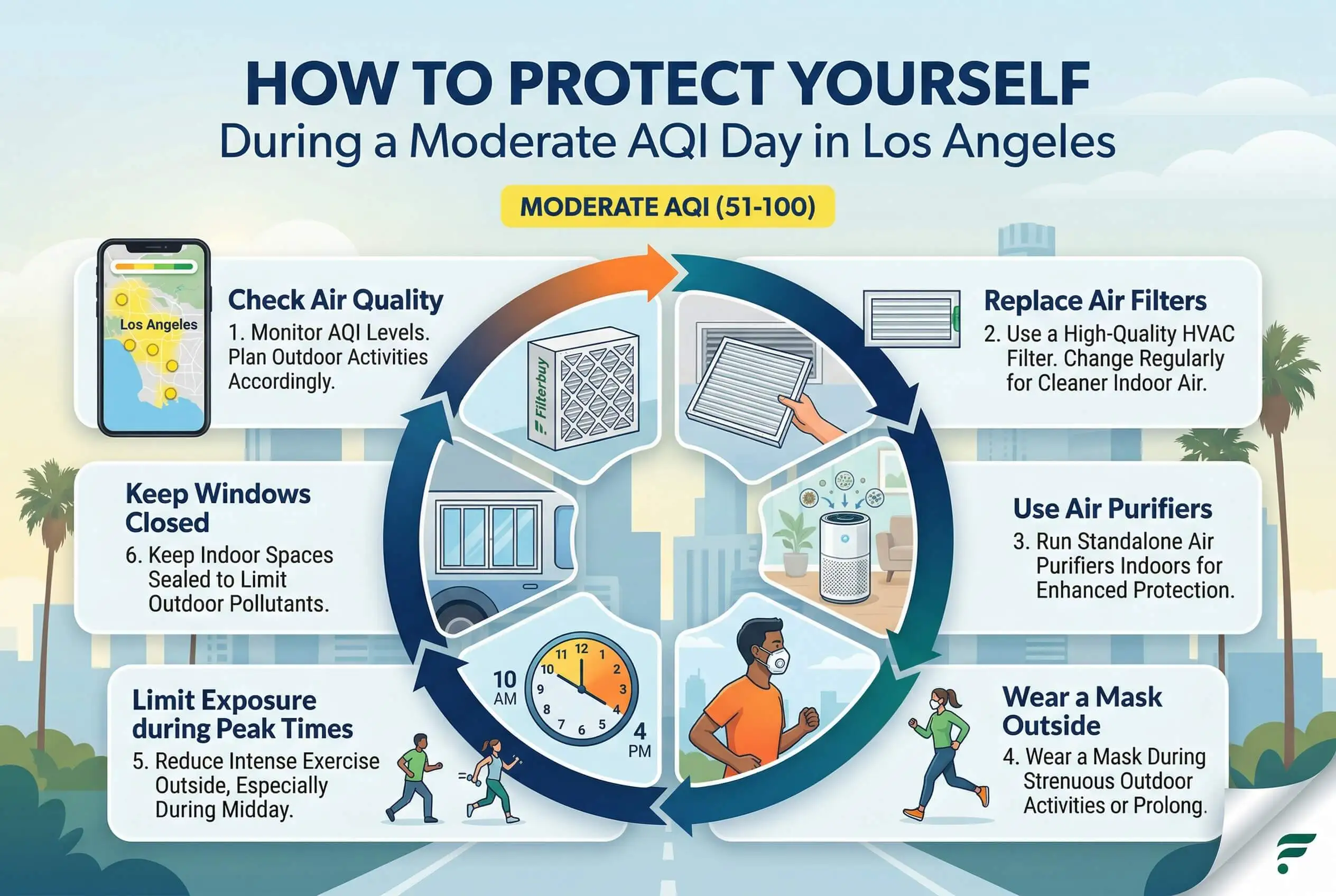
How to Protect Yourself Outdoors on a Moderate AQI Day
Outdoor protection on a moderate AQI day does not require staying inside entirely — but it does require awareness and a few deliberate adjustments.
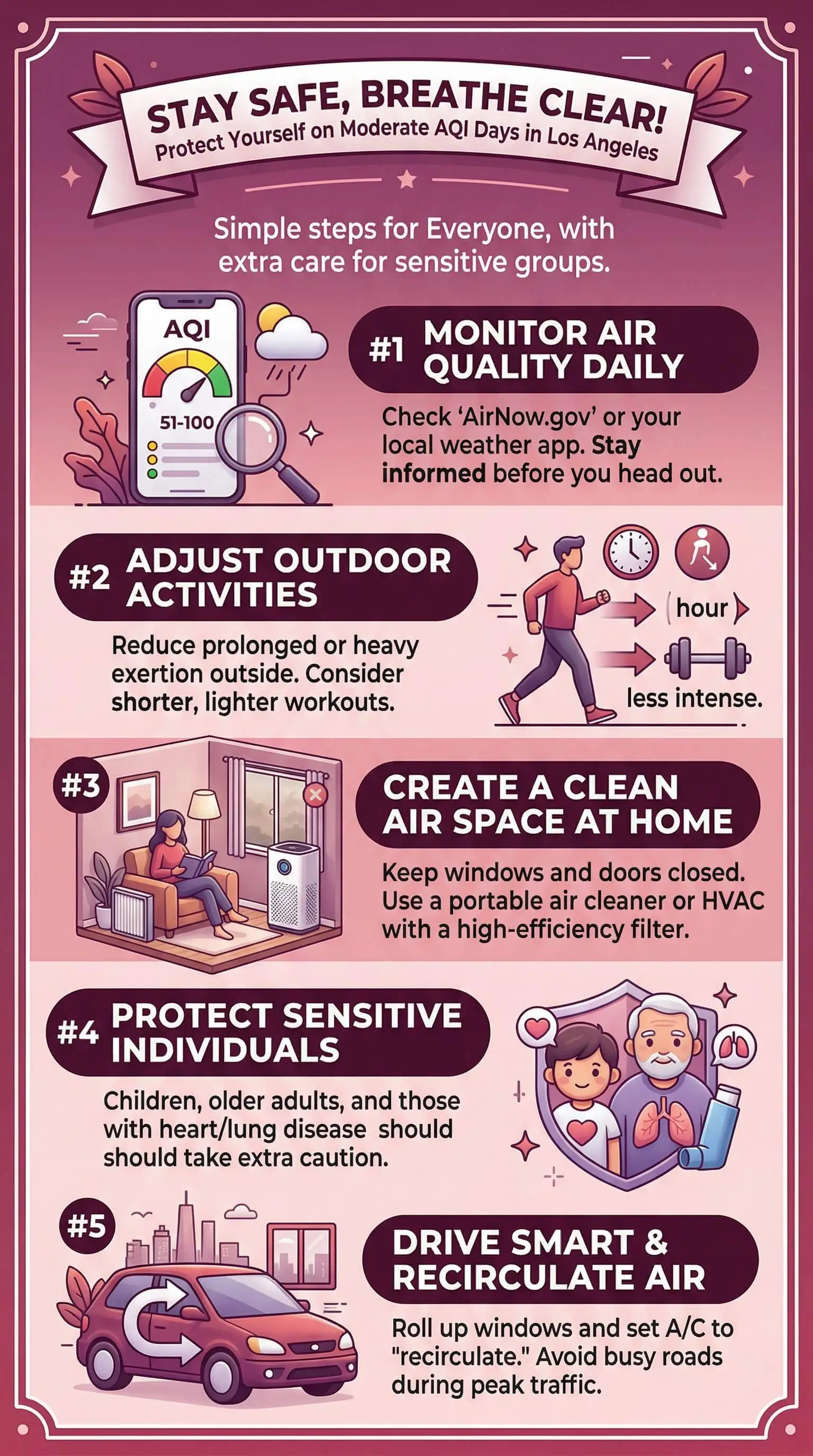
Check the AQI before heading out. Use AirNow.gov or your local LA air quality monitoring source each morning. Conditions in Los Angeles can shift significantly between morning and afternoon as ozone builds up with heat and sunlight.
Limit intense outdoor activity during peak hours. In LA, ozone levels typically peak between late morning and early evening. If you exercise outdoors, morning hours generally offer cleaner air.
Consider a well-fitted mask for sensitive individuals. On days trending toward the upper end of the moderate range, an N95 or KN95 mask provides meaningful filtration for those with respiratory sensitivities.
Pay attention to your body. Coughing, throat irritation, shortness of breath, or unusual fatigue during outdoor activity are signals to move indoors and reassess.
How to Protect Your Indoor Air on a Moderate AQI Day
Outdoor air quality directly influences what you breathe inside. When outdoor AQI climbs into the moderate range, your home's air filtration system, including a MERV 8 filter, becomes one of your most effective lines of defense.
Keep windows and doors closed during peak outdoor pollution hours to reduce the volume of outdoor air entering your home.
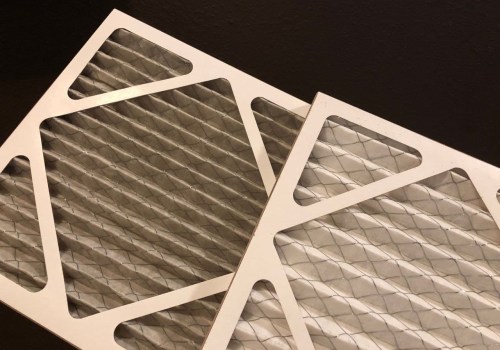
Run your HVAC system with a quality air filter in place. In our experience manufacturing filters for homes across the country, a MERV 11 or MERV 13 filter provides reliable capture of fine particulate matter and common allergens — the pollutant types most active during moderate AQI conditions in LA.
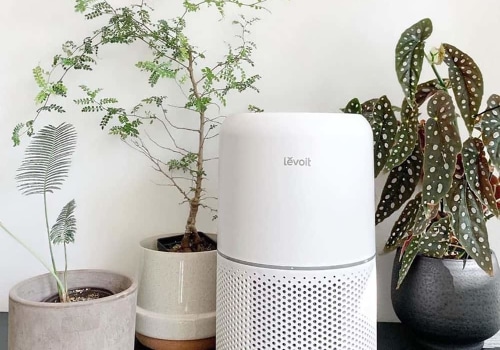
Use a portable air purifier in frequently occupied rooms. Bedrooms and living areas benefit most from supplemental filtration, particularly for households with children or sensitive individuals, and HEPA air purifiers can provide added support.
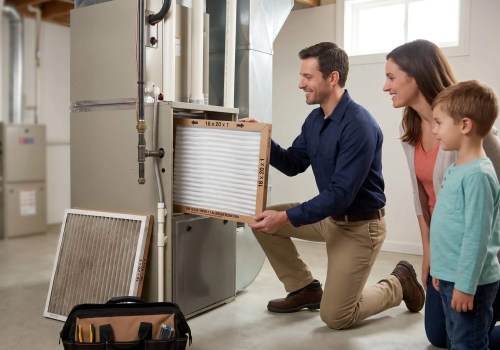
Replace your air filter on schedule. A clogged or overdue filter loses its effectiveness precisely when you need it most. Homes in high-pollution environments like Los Angeles may need more frequent changes than the standard three-month interval.
Avoid adding to indoor pollution. On moderate AQI days, skip activities that generate indoor particulates — candles, wood burning, gas cooking without ventilation, and heavy chemical cleaners all reduce your indoor air quality independently of what is happening outside.
When Moderate AQI Becomes a Warning Sign
A single moderate AQI day in Los Angeles is manageable with the right precautions. A persistent pattern of moderate readings — or a moderate reading that is trending upward — is a signal worth taking seriously.
Los Angeles County residents can monitor real-time air quality through the South Coast Air Quality Management District (SCAQMD), which provides neighborhood-level data more granular than statewide AQI averages. Tracking trends over days and weeks gives you a clearer picture of your actual exposure and helps you make more informed decisions about when to take additional protective steps.
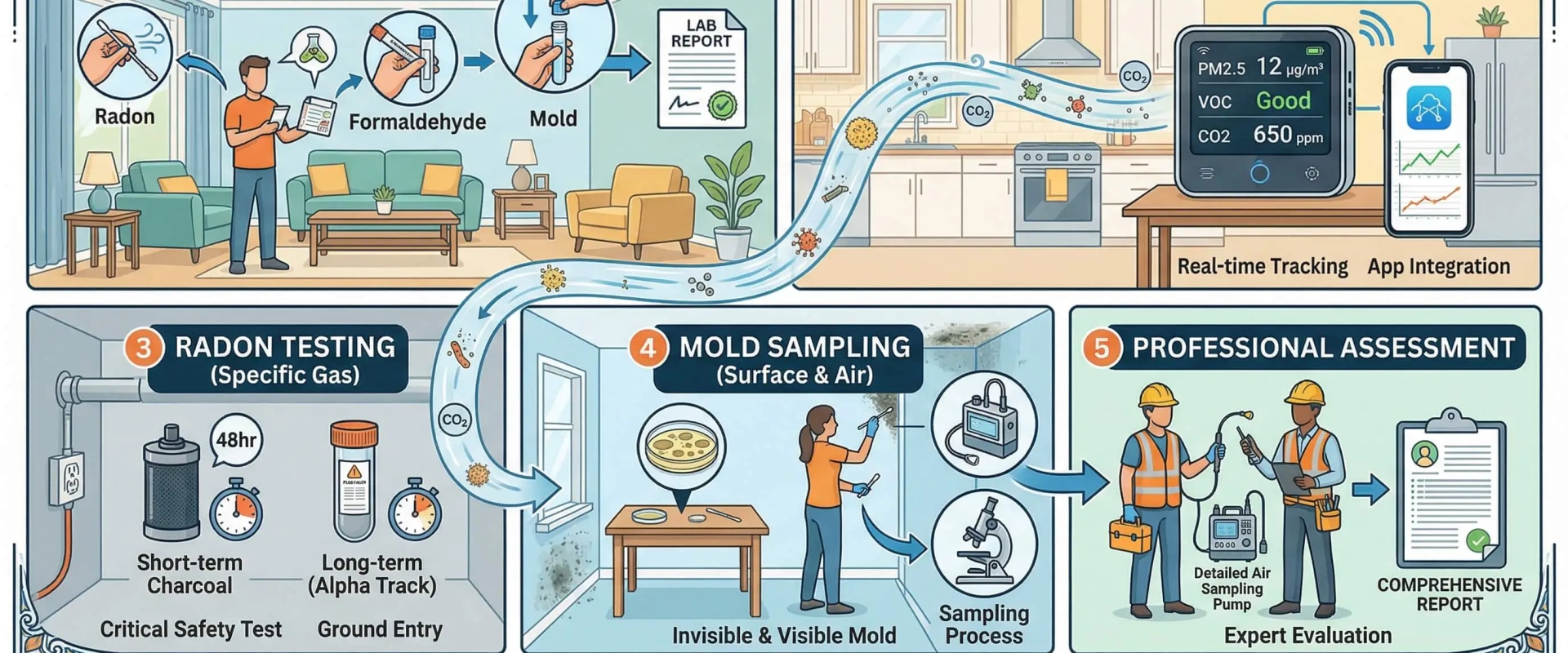
Clean air inside your home remains one of the most consistent protections available regardless of what the outdoor AQI reads on any given day, and indoor air quality testing can help confirm how well that protection is working.
"Moderate AQI days in Los Angeles are the ones that catch people off guard — and in our experience, they're responsible for more cumulative exposure than the high-alert days that make headlines. When you're manufacturing air filters and hearing directly from millions of households, a pattern becomes clear: the days people don't prepare for are the days indoor air quality suffers the most. A MERV 13 filter running in a properly maintained HVAC system won't make the evening news, but for a family in the San Fernando Valley on a 90-degree day with a moderate ozone reading, it's doing real, measurable work."
Essential Resources
After manufacturing air filters for over a decade and serving more than two million households, we know that protecting your family's air starts with having the right information at the right time and choosing the best air filter for your home. These seven resources give Los Angeles residents everything they need to monitor local AQI conditions, understand what those numbers mean for their health, and make confident, informed decisions on moderate air quality days.
Check Real-Time AQI Levels Across Los Angeles — Before You Step Outside
AirNow.gov — California State AQI Map https://www.airnow.gov/state/?name=california Run by the EPA, AirNow is the most trusted starting point for checking current air quality conditions across California. Pull it up each morning before outdoor activity — especially on days when LA's ozone levels are building toward the upper end of the moderate range.
Get the Most Precise AQI Data Available for Your LA Neighborhood
South Coast AQMD — Current Air Quality Data Map https://www.aqmd.gov/home/air-quality/current-air-quality-data This is the resource we point LA-area households to first. The South Coast Air Quality Management District's interactive map delivers neighborhood-scale AQI readings across Los Angeles, Orange, San Bernardino, and Riverside counties — pulling from regulatory monitors, hundreds of low-cost sensors, and forecast models across more than 1,000 locations. No other source gives you a more granular picture of what the air in your specific neighborhood is doing right now.
Pinpoint Air Quality Conditions in Your Specific Part of LA County
South Coast AQMD — Current Readings at Air Monitoring Subregions https://www.aqmd.gov/home/air-quality/current-air-quality-data/current-readings-at-air-monitoring-subregions Conditions in the San Fernando Valley can look very different from conditions in the LA Basin or along the coast on the same day. This resource breaks down real-time readings by subregion within the South Coast Air Basin so you can see exactly what your part of the county is dealing with — not just a countywide average.
Understand Exactly What the Number on the Map Is Telling You
AirNow.gov — AQI Basics https://www.airnow.gov/aqi/aqi-basics/ A moderate AQI reading of 52 and one of 99 carry the same label — but they are not the same. The EPA's AQI Basics guide explains how the index is calculated, what each of the six categories means, and how to translate any reading into a practical health decision for your household.
Know What a Moderate AQI Reading Means for Your Family's Health
AirNow.gov — AQI and Your Health https://www.airnow.gov/aqi/aqi-and-your-health/ This EPA resource connects specific AQI ranges to health recommendations for both the general public and sensitive groups — children, older adults, and anyone managing asthma, allergies, or heart or lung conditions. If you have a family member who falls into one of those categories, this page should be bookmarked alongside your local AQI map.
Go Deeper With California's Statewide Air Quality Authority
California Air Resources Board — Ambient Air Quality Monitoring Program https://ww2.arb.ca.gov/our-work/programs/ambient-air-quality-monitoring-program CARB oversees California's statewide monitoring network and provides the historical data, regulatory context, and long-term trend reporting that explains why Los Angeles air quality behaves the way it does across seasons. When you want to understand the full picture behind a single day's reading, this is where to look.
See How Many Moderate AQI Days Los Angeles Actually Logs Each Year
U.S. EPA — Outdoor Air Quality Data: Los Angeles County https://www.epa.gov/outdoor-air-quality-data One of the patterns we see consistently in high-pollution metros is that moderate AQI days accumulate quietly — adding up to far more cumulative exposure than the occasional high-alert day. The EPA's Air Quality Index Daily Values Report for Los Angeles County puts that pattern into hard numbers, showing how frequently the county logs good, moderate, and unhealthy air days year over year.
These seven resources help Los Angeles residents track moderate AQI conditions, understand what the numbers mean for their health, and use Top MERV 8 home furnace filters to better protect indoor air on days when outdoor pollution quietly builds.
Supporting Statistics
Numbers tell the story that clear skies in Los Angeles cannot. After manufacturing air filters for over a decade and serving more than two million households, we've learned that the customers who protect their families most effectively are the ones who understand what the data actually says — not just what the AQI looks like on a given morning.
7.3% of Children in Los Angeles County Currently Have Asthma
According to the 2023 Los Angeles County Health Survey, 7.3% of children ages 0 to 17 in LA County have asthma. Rates are notably higher among Black and African American children Los Angeles County Public Health at 9.5% and children of Latino ancestry at 8%.
What that statistic doesn't show is how many families don't yet connect their child's respiratory symptoms to air quality. In our experience, a moderate AQI day in Los Angeles is a documented trigger for these households, and making air ionizer installation a priority can be part of the response, not background noise. Key takeaways:
Asthmatic children are among the most vulnerable on moderate AQI days
A clogged or underperforming filter actively worsens indoor exposure
Indoor air filtration is one of the most direct protective steps available
Source: Los Angeles County Department of Public Health http://publichealth.lacounty.gov/phcommon/public/media/mediapubhpdetail.cfm?prid=5151
A 10% Reduction in PM2.5 Could Prevent More Than 400 Deaths Per Year in Los Angeles County
The CDC's Environmental Public Health Tracking Network found that a 10% reduction in PM2.5 could prevent more than 400 deaths per year in a highly populated county like Los Angeles County. CDC
We've spent over a decade engineering filters around fine particulate capture. Here's why that matters for LA households specifically:
PM2.5 is small enough to bypass the body's natural respiratory defenses
It is invisible to the naked eye and active at moderate AQI concentration levels
A MERV 13 filter is not a premium upgrade in this region — it is the appropriate baseline
Source: CDC Environmental Public Health Tracking Network https://ephtracking.cdc.gov/showAirData.action
The South Coast Air Basin Carries a Federal "Extreme" Nonattainment Designation for Ozone
The U.S. EPA designated the South Coast Air Basin — covering large portions of Los Angeles, Orange, Riverside, and San Bernardino counties — as "extreme" nonattainment for the 2015 8-hour ozone standard, with a mandated attainment deadline of August 2038. AQMD
That deadline is twelve years away. In our experience serving households in high-pollution metros, that context matters. This is not a region trending toward clean air fast enough to relax protective habits. What the designation means in practical terms:
Los Angeles is formally acknowledged at the federal level as one of the most ozone-compromised air basins in the U.S.
Moderate AQI days here exist within a larger pattern of persistent noncompliance
Protective habits — filtration, limiting outdoor exertion, monitoring AQI daily — are not overcautious in this environment
Source: South Coast Air Quality Management District — 2022 Air Quality Management Plan https://www.aqmd.gov/docs/default-source/clean-air-plans/air-quality-management-plans/2022-air-quality-management-plan/final-2022-aqmp/03-es.pdf
Mobile Sources Generate 80% of the Emissions That Form Ozone Across the LA Basin
In the South Coast Air Basin, mobile sources — heavy-duty trucks, ships, airplanes, locomotives, and construction equipment — account for 80% of the nitrogen oxide emissions responsible for ozone formation. AQMD
One pattern we've observed serving households in high-traffic metros: customers often look for a single visible source to explain poor air quality. In Los Angeles, that search misses the point. What's actually happening on a moderate AQI afternoon:
Ozone is not emitted directly — it forms when vehicle exhaust reacts with sunlight
It builds across an entire basin that geography prevents from dispersing
Levels typically peak between late morning and early evening — precisely when outdoor activity is highest
Keeping windows closed, running a quality filter, and limiting midday outdoor exertion are not overcautious responses. They are the correct ones.
Source: South Coast Air Quality Management District — 2022 Air Quality Management Plan https://www.aqmd.gov/docs/default-source/clean-air-plans/air-quality-management-plans/2022-air-quality-management-plan/final-2022-aqmp/03-es.pdf
Final Thoughts
Los Angeles has some of the most studied, most monitored, and most documented air quality challenges of any metro area in the United States. What is harder to find than the data is the honest perspective that connects those numbers to what they mean inside your home.
Here is ours.
Moderate AQI Days Are Underestimated Because They Are So Common
When something happens with enough regularity, it stops feeling like a risk. A reading between 51 and 100 doesn't trigger emergency alerts, close schools, or generate news coverage. It gets treated as acceptable — which, technically, it is for most healthy adults on any single day.
But air quality exposure is not a single-day equation.
In our experience, the households that struggle most with indoor air quality are rarely the ones who ignored an Unhealthy alert. They are the ones who let the moderate days accumulate:
Windows open through a warm LA afternoon
A filter two months past its replacement date
No air purifier running in the room where a child with undiagnosed asthma wakes up coughing every morning
The damage from poor air quality rarely arrives all at once. It compounds.
Moderate AQI Means Something Different in Los Angeles
A moderate AQI designation in a city with cleaner baseline conditions is not the same as a moderate AQI designation in a basin the federal government has formally classified as extreme nonattainment for ozone — a standard Los Angeles is not expected to meet until 2038 at the earliest.
In this region specifically:
The pollution floor is higher than in most U.S. cities
The pollutant mix is more complex, driven by traffic, industry, and geography working together
The basin's topography ensures pollutants stay in the air longer than they would almost anywhere else
What We Recommend Based on What We Have Seen Work
After over a decade of manufacturing filters for households across the country, including some of the most air quality-challenged metros in the U.S., these are the habits that make the most consistent difference:
Replace your air filter on schedule — and in high-pollution environments like Los Angeles, consider shortening that interval
Move up to a MERV 13 filter if your HVAC system supports it — it is the most practical upgrade available for fine particulate capture
Check the AQI each morning before outdoor activity, not just when the sky looks hazy
Take moderate AQI days seriously for any household member who is a child, older adult, or managing a respiratory or cardiovascular condition
The outdoor AQI on any given day in Los Angeles is not up to you. What happens to the air once it enters your home is. That is the part we have spent over a decade helping families get right.
FAQ on Air Quality Index Map Los Angeles
Q: Where can I find the most accurate real-time air quality index map for Los Angeles?
A: After serving more than two million households, the two sources we point LA residents to first are:
South Coast AQMD — aqmd.gov. The most locally precise option available. Pulls from regulatory monitors, low-cost sensors, and forecast models across more than 1,000 locations. Delivers neighborhood-level readings, not county-wide averages.
AirNow.gov. The broader California picture backed directly by EPA data.
Use both together. Conditions in the San Fernando Valley, the LA Basin, and coastal neighborhoods can look very different on the same moderate AQI morning. A county-wide average will not tell you which part of the region you are actually breathing in.
Q: What does a moderate AQI reading mean for Los Angeles residents?
A: A moderate AQI falls between 51 and 100. Technically acceptable for most healthy adults — but a documented concern for:
Children and infants
Older adults
Anyone managing asthma, allergies, COPD, or heart or lung conditions
In our experience manufacturing filters for high-pollution metros, a moderate reading in Los Angeles is not the same as a moderate reading in a city with cleaner baseline conditions. Key context:
The South Coast Air Basin carries a federal "extreme" nonattainment designation for ozone
The region is not expected to meet federal ozone standards until 2038
Moderate here is not a reassurance — it is a starting point for deciding how to protect your household that day
Q: What time of day is air quality the worst in Los Angeles?
A: The moderate AQI days that catch LA residents most off guard are the ones that start clean and deteriorate by midday. Here is how ozone builds in the LA Basin:
Vehicle exhaust accumulates during morning traffic hours
Rising temperatures and sunlight trigger ozone formation
Concentrations peak between late morning and early evening
By early afternoon, air that registered acceptable at 7:00 AM can be meaningfully more polluted
The practical implication: checking the AQI before a morning walk is not enough. Check it again before any midday or early afternoon outdoor activity — particularly for children and sensitive household members. In Los Angeles, ozone does not announce itself. It builds quietly until it peaks.
Q: How does Los Angeles air quality affect indoor air in my home?
A: Staying indoors on a moderate AQI day is protective — but only if the home is set up to keep outdoor air out and filtered air circulating. What happens when it is not:
Fine particulate matter and ozone precursors enter through open windows, doors, and gaps in the building envelope
Pollutants accumulate in enclosed spaces
Indoor air quality can be worse than the outdoor AQI reading suggests
The most effective combination we recommend for LA households:
Keep windows closed during peak pollution hours
Run a MERV 13 filter in a properly maintained HVAC system
Add a portable air purifier in bedrooms and living areas where family members spend the most time
Q: How often should I replace my air filter in Los Angeles compared to other cities?
A: The standard 60 to 90 day replacement interval is not the right benchmark for Los Angeles. In our experience, filters in LA homes accumulate particulate load faster than filters in less polluted environments. Here is why:
Vehicle emissions and industrial activity create persistent baseline pollution
Seasonal wildfire smoke adds additional particulate burden throughout the year
The basin's geography traps pollutants rather than dispersing them
A filter working harder degrades faster — and an overdue filter loses capture efficiency at precisely the moment outdoor conditions demand the most from it
What we recommend for LA households:
Check filter condition monthly
Replace on a 45 to 60 day schedule for most homes
Shorten that interval further for households with children, pets, or members managing respiratory or cardiovascular conditions
Protect Your Home's Air on Every Moderate AQI Day in Los Angeles
A quality air filter is one of the most direct steps you can take to protect your family when outdoor air quality works against you — and in Los Angeles, that means being prepared year-round. Shop Filterbuy's MERV 11 and MERV 13 air filters, trusted by more than two million households across the country, make clean indoor air the one air quality variable in your home that is always within your control.