That’s the part most owners under-think when they grab a 20x20x1 air filter from the hardware store and call it a day. In a dog home, a quality 20x20x1 air filter can do real daily work by helping capture dander, dust, and hair before they keep cycling through the ductwork. The difference between a filter that earns its keep and one that lets dander rebuild comes down to four decisions: MERV tier, pleat density, replacement cadence, and whether the extras like carbon or electrostatic media actually pull weight.
TL;DR Quick Answers
20x20x1 air filter
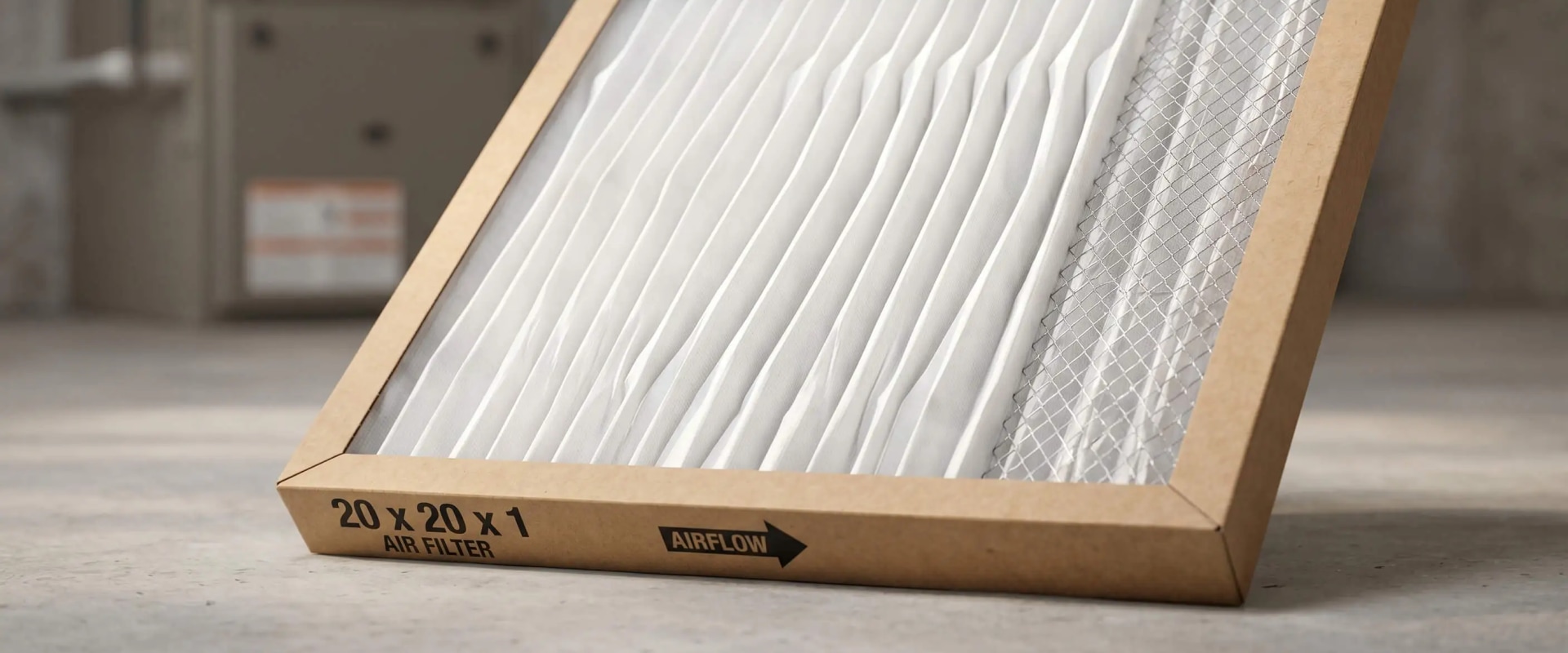
A 20x20x1 air filter is a standard 1-inch residential HVAC filter sized for a 20-by-20-inch return slot. It catches airborne dust, pollen, and pet dander before they recirculate through the home. For most households we recommend MERV 11 as the practical baseline, and MERV 13 for allergy-sensitive or pet homes where the HVAC system can carry the higher static pressure.
What it fits: Any HVAC return with a 20-by-20-by-1-inch slot. Always confirm against the actual dimensions printed on the existing filter, since 20x20x1 is the nominal size and the true cut often runs slightly smaller (around 19.5 by 19.5 by 0.75 inches).
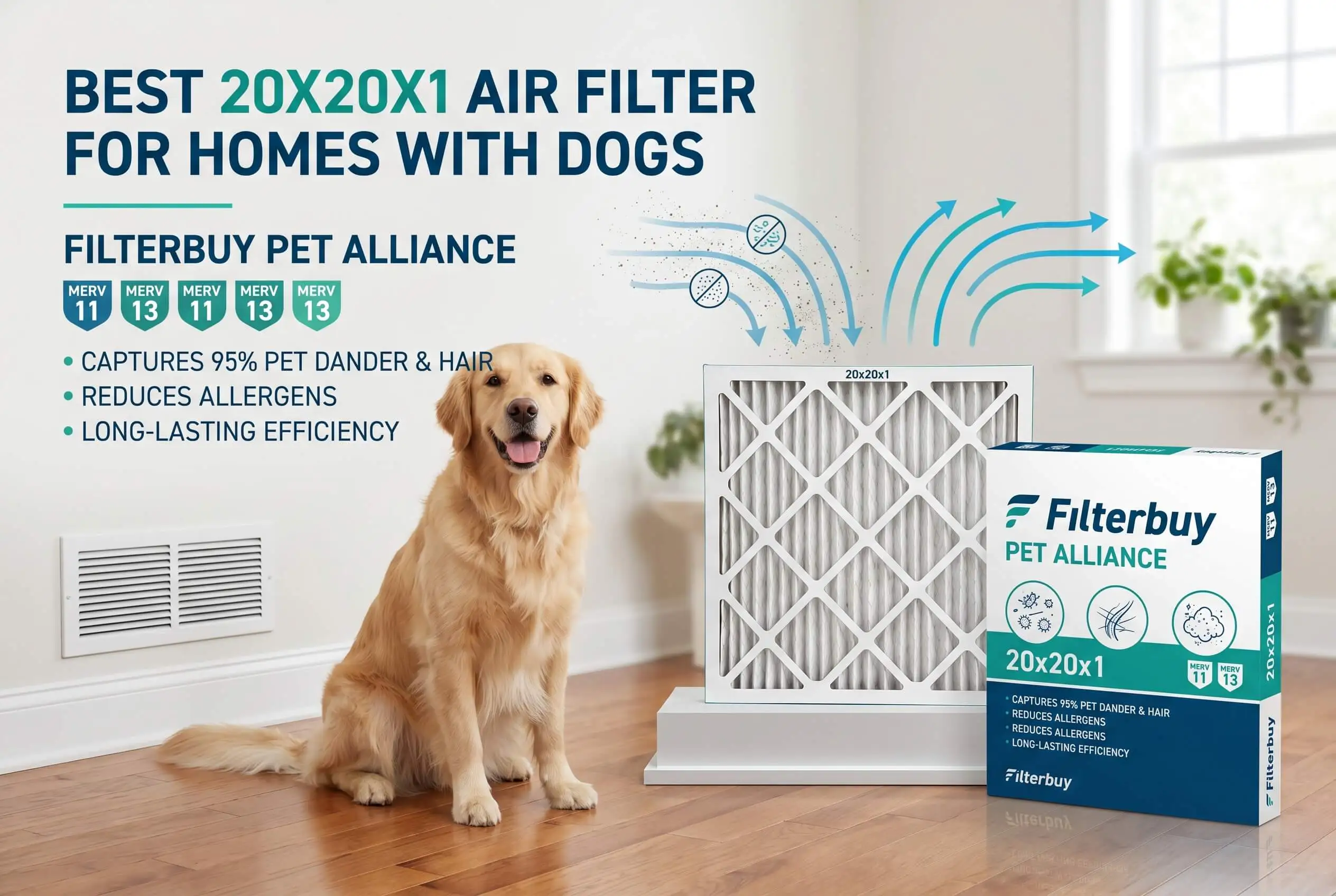
Recommended MERV tier: MERV 11 for most homes. MERV 13 for allergy-sensitive households or homes with pets, only if the HVAC system can handle the higher static pressure.
Replacement cycle: Every 60 to 90 days in pet-free homes. Every 30 to 60 days in pet households. Inspect at the 30-day mark either way.
Top Takeaways
MERV 11 is the practical baseline for most dog households. Enough capture to handle airborne dander, low enough resistance to keep standard residential blowers happy.
MERV 13 is worth the upgrade for allergy-sensitive residents and multi-dog homes. Only attempt it if the HVAC system is rated for the higher static pressure.
Replacement cadence in a dog home runs 30 to 60 days, not the 90 days on the package. Heavy shedders and multi-dog households cycle faster than that.
Pleat count and electrostatic media matter as much as MERV rating. Two filters at the same tier can perform very differently in a dog household.
Activated carbon earns its place in multi-dog and indoor-only homes. For a single dog with regular outdoor access, it's optional.
Why Dogs Change the 20x20x1 Filter Math
Dog dander runs about 2.5 to 10 microns. That's smaller than the flecks you can see on a baseboard, and small enough to stay airborne long after the dog has left the room. Pet allergens are also literally sticky. They cling to upholstery, clothes, and the inside walls of the HVAC ductwork, then come back into circulation every time the blower kicks on.
So a 20x20x1 filter in a single-dog house is processing a much higher dander load than the same filter in a pet-free home. Add a second dog, or a heavy-shedding breed like a husky, retriever, or shepherd, and that load multiplies. We've watched plenty of owners run the same MERV 8 filter their HVAC tech installed five years ago, then wonder why the surfaces above the supply vents have a powder coat by month three.
The filter is doing exactly what its rating says it'll do, which doesn't include compensating for a dog or replacing the need for duct cleaning when buildup is already in the system. The 20x20x1 spec only describes the slot in the return. What goes inside that slot is on you.
MERV 8 vs. MERV 11 vs. MERV 13: What Actually Captures Dander
MERV is the ASHRAE standard rating system for how efficiently a filter captures airborne particles. The higher the number, the smaller the particles caught.
MERV 8 catches the bigger stuff well: visible dust, lint, pollen. But a healthy chunk of fine dander in the 1 to 3 micron range slips right through. That works in a pet-free home. In a dog household, MERV 8 marks the floor of acceptable filtration, not the standard you should aim for.
MERV 11 captures roughly 85 percent of particles in the 1-to-3 micron range. That brackets the fine end of dog dander and a good portion of the saliva proteins that ride along with shed fur into the air. For most dog homes, this is the practical baseline: enough capture to move the needle on indoor allergen load, low enough resistance that standard residential blowers handle it without a fuss.
MERV 13 is a different conversation. It catches up to 50 percent of particles down to 0.3 microns, and 90 percent or better in the 1-to-3 micron range. That puts it at the residential ceiling for most furnaces. If anyone in the home has pet allergies, if there are multiple dogs, or if the HVAC system was sized for the higher static pressure, MERV 13 earns the upgrade. Older single-stage furnaces running a tired blower can't carry it without strain.
What Makes a 20x20x1 Filter Work Harder in a Dog Home
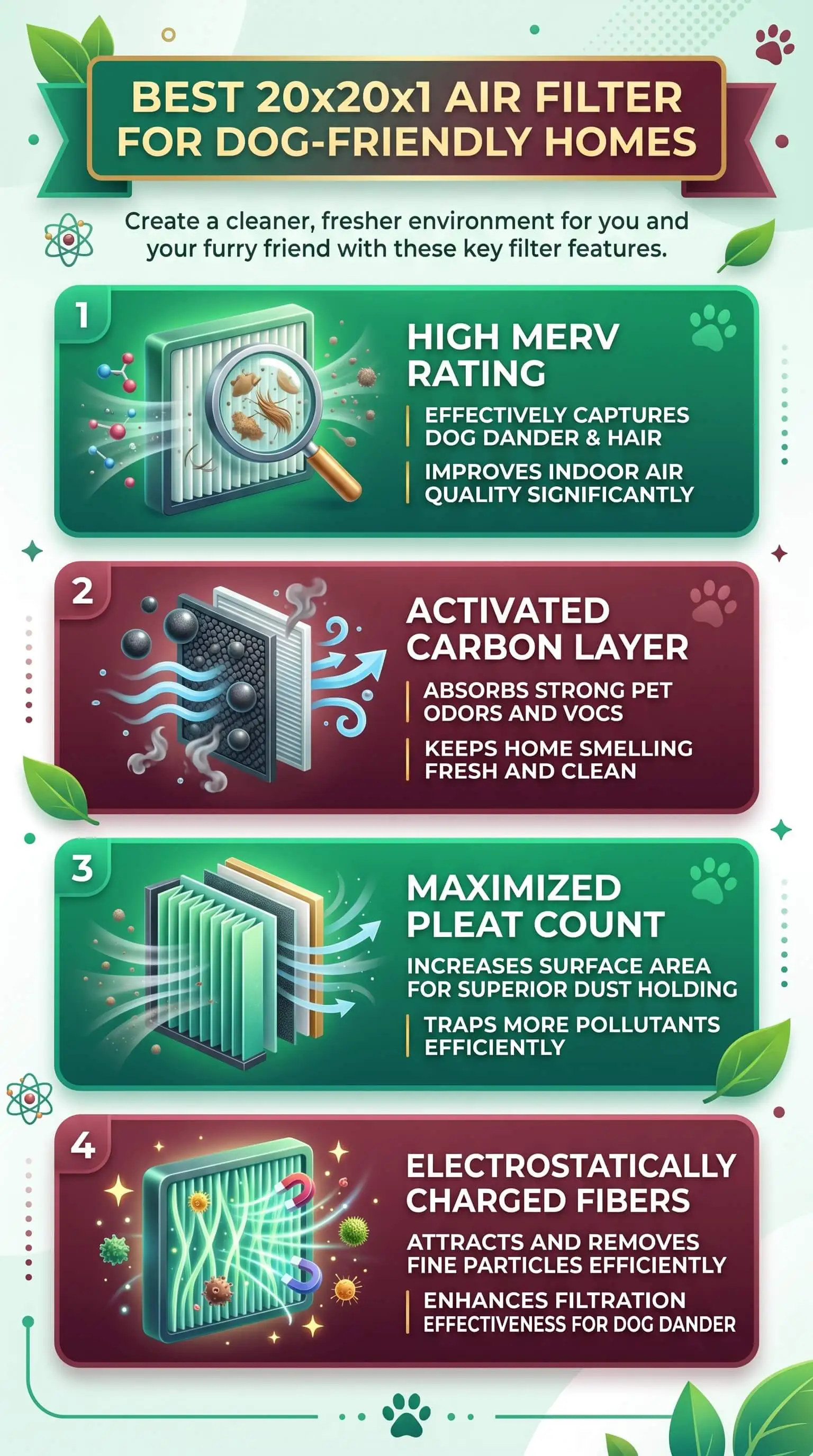
Two filters with the same MERV rating can perform very differently in a dog household. Pleat density, electrostatic media, and a carbon layer are what separate them.
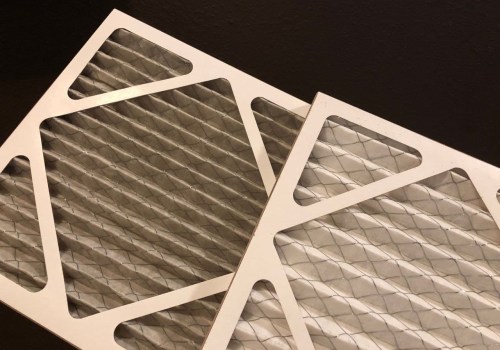
Start with pleat density. More pleats per inch means more media surface area, which means more dander capture before pressure drop kicks in. In a dog home, that's the difference between a filter that lasts 30 days and one that lasts 60. For a refresher on how a pleated particulate air filter actually works under the hood, this overview of pleated particulate filter construction covers what's shared across most residential designs.
Electrostatic media adds another lever. Some filter media carry an electrostatic charge that pulls fine particles out of the airstream by attraction, not just by mechanical interception. For the 1-to-3 micron range where dander lives, that adds real capture without adding pressure drop.
Then there's the activated carbon layer. Carbon is what handles odor: wet-dog smell, kennel smell, the closed-up cooking-and-pet funk that builds up in winter. In a multi-dog or strictly indoor home, that layer earns its keep. With a single dog who spends decent time outside, it's a nice-to-have rather than a must.
How Often to Replace 20x20x1 Filters in a Dog Home
The label on most 1-inch residential filters says 60 to 90 days. Dog homes need to run tighter than that:
Single dog, average shedder: every 60 days, with an inspection at the 30-day mark.
Single dog, heavy shedder like a retriever, husky, or shepherd: every 30 to 45 days.
Multi-dog house, or any dog with allergies of their own: every 30 days, no exceptions.
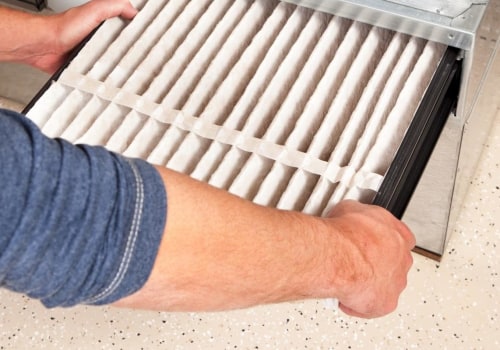
You'll know a filter has aged past its useful life when the surface goes uniform grey-brown, the pleats start to compress visibly, or you catch a noticeable smell when you pull it out of the return.
Where you buy matters less than how often you swap. But ordering in bulk on a subscription almost always costs less per replacement than picking up singles at retail, and the bigger benefit is that subscriptions remove the friction that makes homeowners stretch a filter another two weeks past its expiration. For one route, a direct-to-consumer source for 20x20x1 filters carries the size in both MERV 11 and MERV 13. Home Depot, Lowe's, and Amazon stock it too, and any of those works fine as long as the cadence holds.
"The most common complaint I get from dog owners isn't about dander or odor. It's a whining blower noise that shows up six weeks after they swap to a higher-MERV filter. They figure higher must be better. The truth is their system wasn't sized for the static pressure, and the filter clogged faster because nobody told them MERV 13 in a dog home needs a 30-day change cycle, not 90."
7 Essential Resources
The recommendations in this guide draw on these primary sources. Each one is worth bookmarking.
1. AAFA: Allergic to Your Pet? Learn About Dog and Cat Allergies. The most accessible overview of how pet allergens behave indoors and what to do about them.
2. NIEHS (NIH): Pet Allergens. Peer-grade explanation of why dander (not hair) is the actual allergen carrier, and why no breed is truly hypoallergenic.
3. ACAAI: Pet Allergies. Clinician-facing breakdown of dog allergen levels and how they concentrate in rooms the dog uses most.
4. AAAAI: Pet Allergy. Symptom guidance, household intervention recommendations, and the case for HEPA cleaners alongside HVAC filtration.
5. American Lung Association: Pet Dander. Short, sharp overview of why pet allergens linger airborne longer than most other indoor particulates.
6. EPA: Indoor Air Quality. The federal IAQ portal, including the EPA's filtration framing and whole-house ventilation guidance.
7. ASHRAE: Standards & Guidelines (MERV reference). The standards body behind the MERV rating system, and the reference document for any claim about what a given MERV tier actually captures.
3 Statistics
1. About 62 percent of U.S. households own a pet, and more than 161 million of those pets are cats or dogs (AAAAI, Pet Allergy). The 20x20x1 size is a common residential filter spec, which means pet households make up the majority of the buyer pool, not an edge case.
2. Pet dander stays airborne longer than most other indoor allergens because the particles are microscopic and jagged in shape, which keeps them in the air and makes them cling to furniture, bedding, and fabrics (American Lung Association, Pet Dander). That's the physical reason HVAC filter selection matters more in a dog home than a pet-free one.
3. After a pet is removed from a home, the dander load can still take six months or more to clear fully (AAAAI, Pet Allergy). A 20x20x1 filter running at the right MERV tier is one of the few interventions that actively works against that long tail.
Final Thoughts and Opinion
None of this is complicated. Most dog households want MERV 11. If someone in the house has allergies and the HVAC was built to handle the higher static pressure, step up to MERV 13. And run a 30-to-60-day replacement cycle no matter which tier you land on. The 90-day label on the package wasn't written for dog houses.
The opinion most homeowners don't want to hear is that the filter is the cheap part of owning a dog. Stretching it past its useful life to save twelve dollars a year is a false economy. The blower has to work harder against the choked-down media. The coils above it foul faster. And the dander you thought the filter was catching ends up recirculating back into the rooms where you actually live.
A 20x20x1 filter in a dog home is doing real work, every cycle, every day. Treating it as a quarterly afterthought is what creates the dander rebound owners notice in winter, when the system runs longer than it does the rest of the year.
Frequently Asked Questions
Is MERV 13 always better than MERV 11 for homes with dogs?
No. MERV 13 captures finer particles, but it also creates more airflow resistance, which not every furnace can take. A newer, properly sized HVAC system can usually handle the upgrade with no issues. An older single-stage furnace or undersized blower can't — you'll see weaker airflow at the supply registers, faster equipment wear, and a filter that clogs sooner than rated. For most dog households, MERV 11 is the safer default.
How often should dog owners change a 20x20x1 air filter?
Plan on 30 to 60 days. The 90-day cycle on the packaging isn't written for dog houses. A single dog with average shedding usually fits the 60-day end of that range. Heavy-shedding breeds like retrievers, shepherds, and huskies move closer to 30. Multi-dog homes should plan on monthly replacement, with a visual check at the two-week mark.
Does a 20x20x1 air filter help with dog odor?
A standard pleated filter doesn't do much for odor on its own. The carbon-layer version does, because activated carbon adsorbs the volatile compounds that cause wet-dog smell, kennel smell, and the closed-up funk that builds up in winter. A single dog with regular outdoor time is usually fine on standard pleated MERV 11. Multi-dog or strictly indoor homes are where the carbon-layer upgrade earns its money.
Will a higher-MERV 20x20x1 filter strain my furnace blower?
It can. Higher MERV ratings create higher static pressure, which means the blower has to work harder to move the same volume of air. In a system that wasn't rated for that resistance, you'll hear it first as a whining blower noise. Then weaker airflow at the supply registers, and faster wear on the equipment itself. Before jumping from MERV 8 straight to MERV 13, check what your system manufacturer specifies for filter resistance, or ask an HVAC technician what your blower can handle.
Are washable 20x20x1 filters worth it for dog households?
For most dog homes, no. Washable filters tend to top out in the MERV 4 to MERV 8 range, which sits below the threshold for catching the fine dander particles that matter most in a pet household. They also need careful maintenance. A washable filter that doesn't get rinsed and dried thoroughly can grow mold and turn into a worse air-quality problem than the dander it was meant to catch.
Find the Right 20x20x1 Filter for Your Dog-Friendly Home
Match the MERV tier to your specific situation first. That depends on how many dogs you have, what kind of coat they carry, and what your HVAC was built to handle. Choose top air filters around that dander load, then lock in a replacement cadence that fits it, and order in bulk so the swap actually happens on time.