If your kid treats the sink like a drive-through, you’re not raising the only one. After years of writing about home health and refereeing my own two at the bathroom door, I’ve landed on one thing that’s held up: you don’t fix a rusher by nagging louder. You fix the reasons they’re rushing. What follows is a practical guide to how to keep kids hands clean when they’d rather be anywhere else.
TL;DR Quick Answers
How to keep kids' hands clean
The most reliable way to keep kids' hands clean is to physically lift germs off the skin with soap, water, and about 20 seconds of scrubbing, then make those 20 seconds easy enough that your child actually does them. With rushers, the fix isn't nagging harder. It's changing what's at the sink.
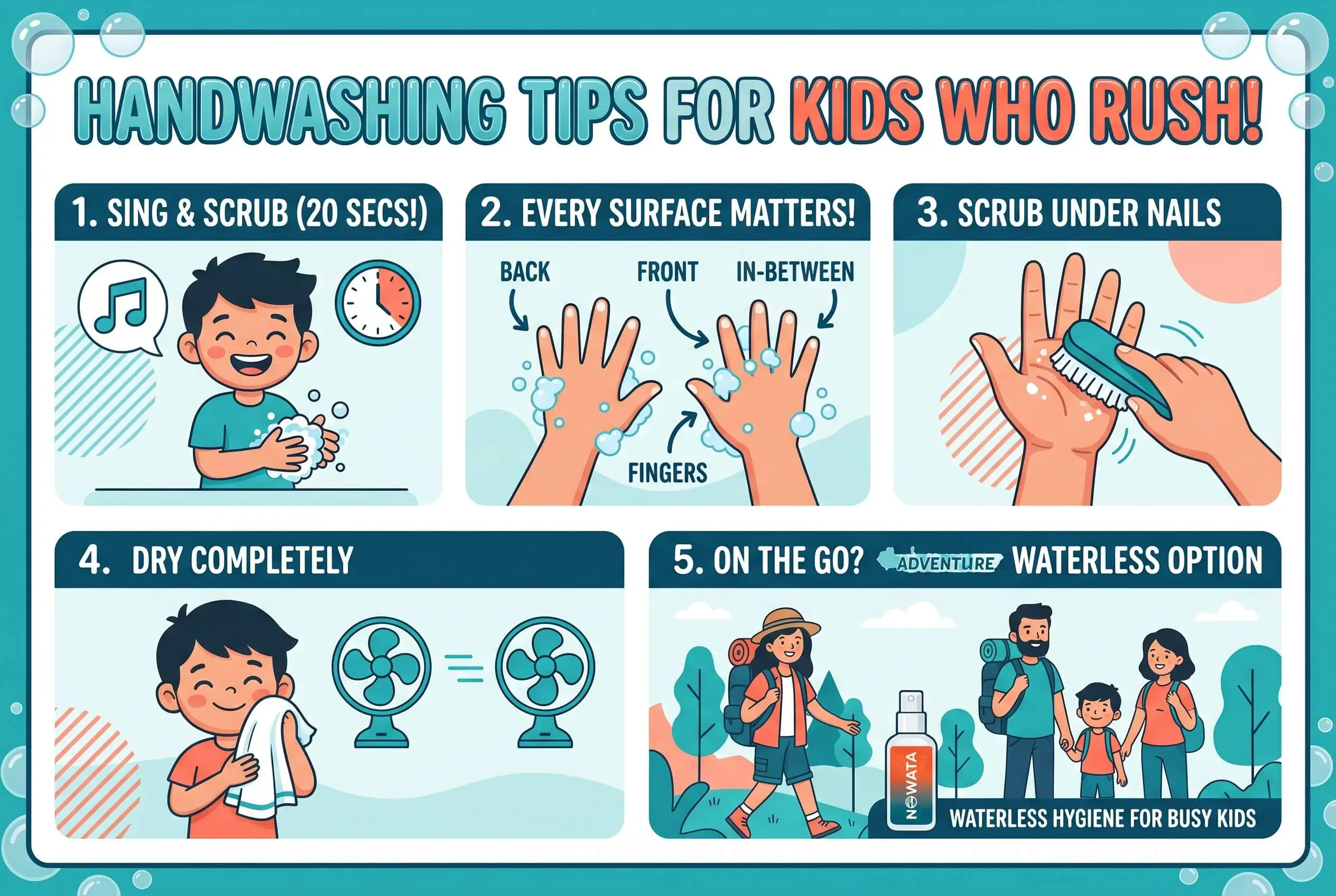
Scrub for 20 seconds. About the length of a short song sung twice, covering palms, backs, between fingers, and under nails.
Wash at the moments that matter. Before eating, after the bathroom, after play, after touching pets, and after coughs or sneezes.
Use soap and water first. It's the gold standard. A sanitizer with at least 60% alcohol is the backup when there's no sink, kept up high and supervised.
Beat the rush by making it fun. A foaming soap they like, a song to finish, or a "scrub till the bubbles are gone" game works better than reminders.
Top Takeaways
Kids rush because germs are invisible, so a quick splash feels like plenty to them.
Aim for at least 20 seconds of scrubbing, with soap on every surface of the hand.
Tricks beat nagging. Reach for a song, the bubbles-gone game, a visible-germ demo, or a sink timer.
The right soap does half the work, so pick a gentle, kid-friendly one they’ll reach for.
Soap and water wins. Sanitizer at 60 percent alcohol is the backup, kept up high and supervised.
Why Kids Rush Through Washing Their Hands
Kids rush because the reward is invisible. They can’t see a single germ, so 20 seconds of scrubbing feels like a tax on their playtime. Once you see it from their side, the rest of the behavior makes sense.
A few other things feed the habit:
They’re bored and want to go back to whatever you interrupted.
The water’s too cold, or it’s too hot, and nobody wants to linger in either.
They can’t stand the soap, or the pump fights back when they push it.
Nobody’s ever shown them what 20 seconds actually feels like, so any amount seems fine.
For most young children, the very idea of “long enough” hasn’t clicked yet, and no amount of reminding installs it overnight. Figure out which reason is yours, though, and you’re already halfway to fixing it.
How to Keep Kids’ Hands Clean in Five Easy Steps
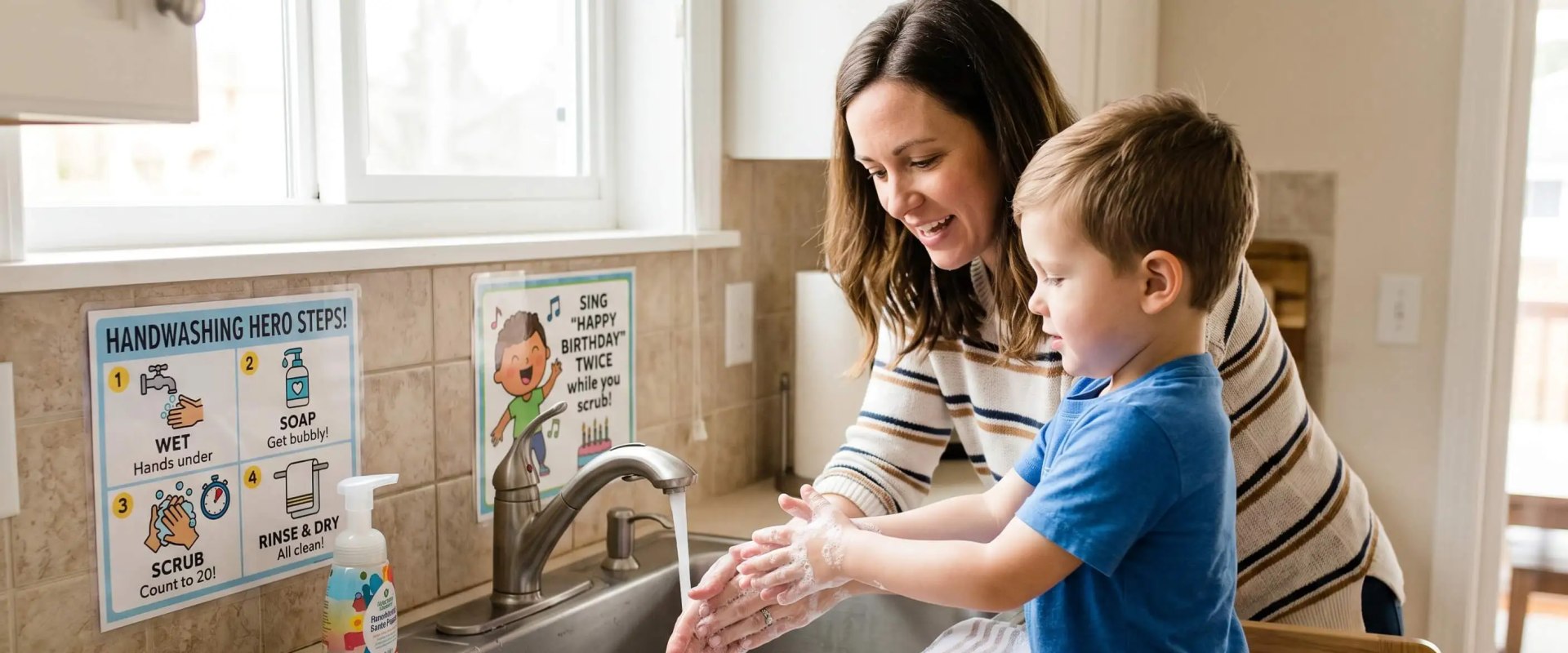
The steps are the same ones the CDC teaches. Walk your child through them slowly the first few times, then hand the routine over:
Wet hands under clean, running water. Keep it on the cool side of warm so it never stings.
Lather with soap, covering the palms, the backs of the hands, between the fingers, and under the nails.
Scrub for at least 20 seconds. This is the step rushers skip, so it’s the one you protect.
Rinse under running water until every last bubble is gone.
Dry all the way with a clean towel. Germs cling to damp skin, so drying matters more than people expect.
Start to finish, it takes about 30 seconds. One of the best hand washing tips is getting your child to honor step three.
Simple Tricks to Get a Rusher to Slow Down
You can’t out-nag a fast washer. You can make 20 seconds feel quick, though, and that changes everything. These are the moves that work in a real bathroom with a real, impatient kid:
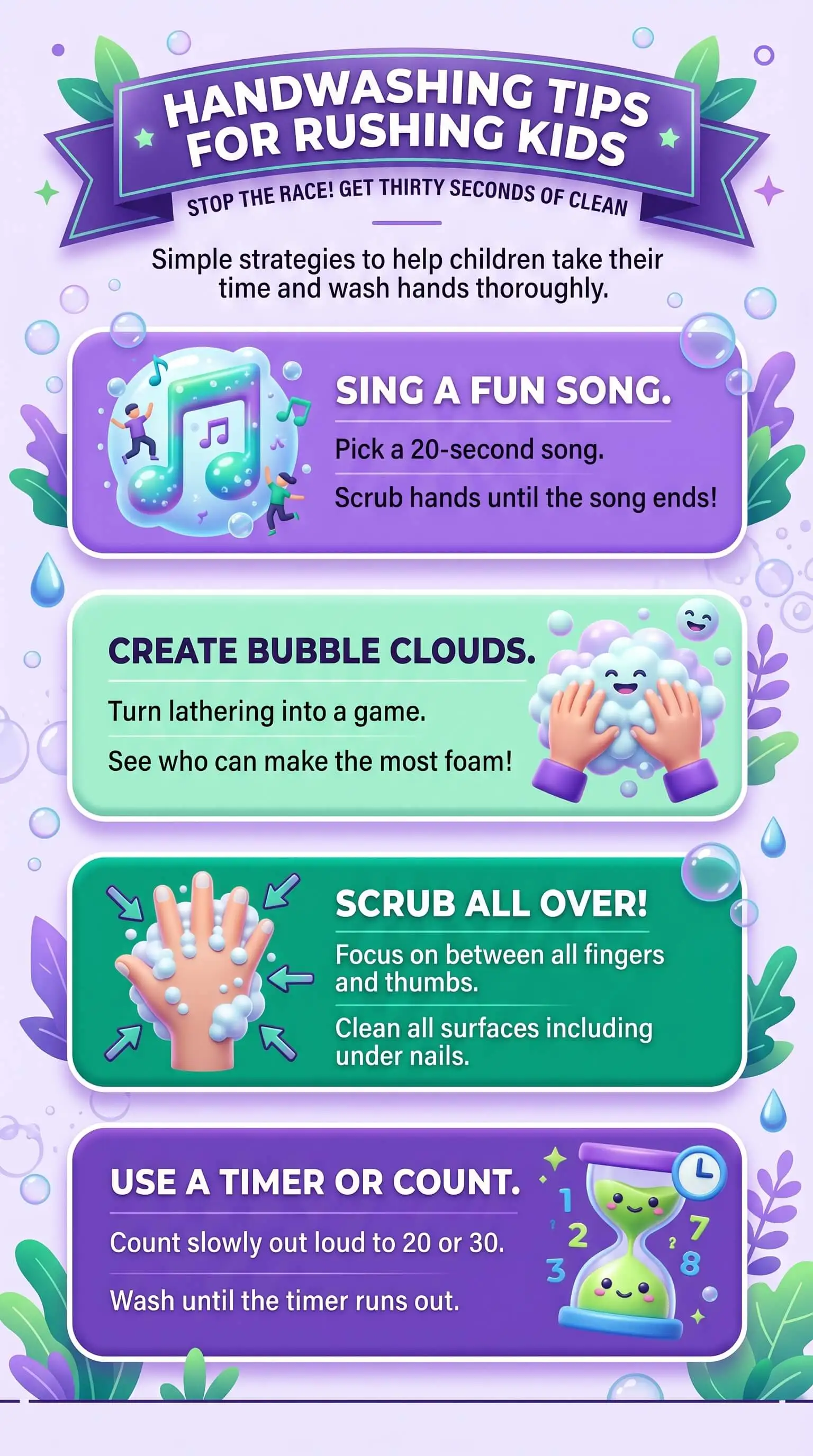
Pick a 20-second song. “Happy Birthday” twice is the classic, but the chorus of a song they love works better, because they’ll want to reach the end.
Play “bubbles gone.” They’re not finished until every bubble has rinsed away, which quietly stretches the scrub.
Make the germs show up. A pinch of pepper scattered on water darts away from a soapy fingertip, and a dot of washable marker on the hand has to be scrubbed off completely. The pepper bowl is the one that finally landed in my house.
Put a sand timer on the sink. A little 30-second hourglass turns washing into a race against the falling sand.
Keep a step stool there. Kids rush when they’re stretching on tiptoe to reach the faucet, and a bit of comfort buys you time.
Pick a Soap Your Kid Actually Wants to Use
The easiest win in this whole routine is a soap your child likes reaching for. Foaming pumps are ideal, since small hands can work them and the foam spreads in a second. Add a scent they enjoy and a gentle formula that won’t sting or dry their skin, and washing turns into something they’ll do without a fight.
If your child has sensitive skin, or you’d rather skip harsh ingredients altogether, a gentle plant-based hand soap made for kids is worth a look. And if dryness or cracking is already a problem in your house, our guide to hypoallergenic hand soap for sensitive skin walks through what to check for on the label.
When Kids Should Wash, and Whether Sanitizer Counts
Hang the habit on the moments that actually matter: before eating, after the bathroom, after playing outside, after touching pets, and after coughing, sneezing, or wiping a runny nose. A small chart taped by the sink helps younger kids remember without you having to.
Soap and water wins every time, especially on hands that look dirty or greasy. Away from a sink, a sanitizer with at least 60 percent alcohol does the job in a pinch. Keep it up high and out of sight, and stay with your little ones while they use it, because a few swallows can cause real harm.
"I stopped fighting my kids about handwashing the day I changed what sat on the sink. A foaming soap they liked, a song they wanted to finish, and a tiny hourglass that turned scrubbing into a race. Nagging never moved the needle. Making it theirs did, and it took me embarrassingly long to figure that out."
7 Essential Resources for Parents
These are the pages I actually trust and come back to, from one parent to another:
CDC: Hand Hygiene as a Family Activity. Start here. It covers when kids should wash, how to teach it at different ages, and why building the habit early pays off. If you read one thing on this list, make it this one.
CDC: About Handwashing. The official five steps and the 20-second rule, straight from the source.
UNICEF: How to Teach Your Kids Handwashing. Kid-level explanations of why washing matters, plus ways to make it feel less like a chore.
Nemours KidsHealth: Hand Washing, Why It’s So Important. Pediatric-backed guidance written for tired parents, not clinicians.
HealthyChildren.org (AAP): Hand Washing, A Powerful Antidote to Illness. The American Academy of Pediatrics on why quick rinses and dirty hands don’t mix, and what to do instead.
Stanford Medicine Children’s Health: Teaching Kids to Wash Their Hands. A short walkthrough you can do standing right next to your child at the sink.
CDC: Hand Hygiene in Schools and Early Care Settings. Washing and sanitizer safety in classrooms and daycares, where kids do half their germ-collecting.
3 Statistics
Three numbers convinced me this was worth getting right:
Washing with soap could protect about 1 in 3 young children who get sick with diarrhea and nearly 1 in 5 who get respiratory infections like pneumonia. That’s a sick week your family doesn’t have to lose. (CDC Handwashing Facts)
Teaching kids to wash cuts school absences from stomach bugs by 29 to 57 percent. Fewer missed days for them, fewer scrambled workdays for you. (CDC Handwashing Facts)
Calls to U.S. poison centers about alcohol-based hand sanitizer rose 36 percent from 2019 to 2020. It’s exactly why I keep the bottle up high and stay with the little one every time he uses it. (CDC: Hand Hygiene in Schools)
Final Thoughts
My honest take, after years of this: we’ve been framing the problem backwards. We treat a rushing kid like they’re being defiant, when most of them simply don’t see the point of a slow scrub. So we nag, the nagging breeds pushback, and the sink becomes a daily standoff nobody wins.
Stop fighting the kid and fix the experience instead. Give them a soap they actually like, a song they want to finish, and a way to watch the dirt come off. Wash your own hands where they can see you, because kids copy what you do long before they listen to what you say. Give it two or three weeks. The rinse-and-run phase passes faster than the parenting forums will have you believe.
Frequently Asked Questions
How do I keep my kids’ hands clean if they always rush?
Change what’s at the sink, not how loudly you ask. Give them a foaming soap they like, a 20-second song they’ll want to finish, and a way to see the germs leave, like the bubbles-gone game. The real answer to how to keep kids’ hands clean is making those 20 seconds worth their while.
How long should a child wash their hands?
At least 20 seconds with soap, about the length of a short song sung twice. Soap needs those seconds to lift and surround the germs so the rinse can carry them off.
How do I get my child to wash for the full 20 seconds?
Turn the time into a game. A favorite song, a sand timer on the sink, or a “scrub until the bubbles are gone” rule all stretch the wash without a single reminder from you.
Is hand sanitizer as good as soap and water for kids?
Soap and water is better, especially on hands that look dirty or greasy. A sanitizer with at least 60 percent alcohol is a solid backup away from a sink, but keep it out of reach and stay with young children while they use it.
What soap is best for kids with sensitive skin?
Look for a gentle, fragrance-light or plant-based formula without harsh ingredients that sting or dry the skin. A foaming pump is easiest for small hands and helps them spread the soap fully. Like HEPA air purifiers support a cleaner indoor environment, the right soap supports a cleaner, easier hand-washing routine for kids.
At what age can a child wash their hands on their own?
Most kids can manage the steps with supervision around age 3 or 4, and more on their own by 5 or 6. Younger toddlers still need hand-over-hand help and plenty of reminders.
Your Next Step
Start with the easy win and put a soap your child actually likes within reach of the sink. Add one trick from this guide, the song or the timer or the pepper bowl, and stick with it for a couple of weeks. You’ll spend far less of your day saying “go wash your hands,” and you’ll trust it more when you do.