The sky over Lake Ontario turned the color of a dirty penny by mid-morning that June, and I spent the next week on the phone with people who'd never once wondered what their air filter was doing. Rochester's air is good. The same data that proves it is what other people use to argue the opposite, which is how half this city ended up unsure what it's breathing.
You can't see any of it. That's the whole problem with air. A grade published once a year describes a typical Tuesday and tells you nothing about the Tuesday you're standing in, which is why checking air quality Rochester NY conditions in real time can give you a much clearer picture of when the air is clean and when smoke rolls in from nine hundred miles away.
TL;DR Quick Answers
Air Quality Rochester NY
Rochester, NY has good air quality. The metro passes all three pollution measures the American Lung Association tracks, averaging 1.3 unhealthy ozone days a year. The catch is that a passing annual grade tells you nothing about the day you're actually breathing.
Grades: Passing on ozone, short-term particles, and year-round particles
Monroe County ozone: B, off two high-ozone days across 2022 to 2024
National ozone rank: 125th worst, which reflects a crowded field rather than dirty air
Typical daily AQI: Green under 50, or low yellow between 51 and 100
Worst stretches: Hot, still July and August afternoons, and any week Canadian wildfire smoke drifts down
What no grade covers: Your indoor air, where you take most of your breaths and nobody publishes a score
Top Takeaways
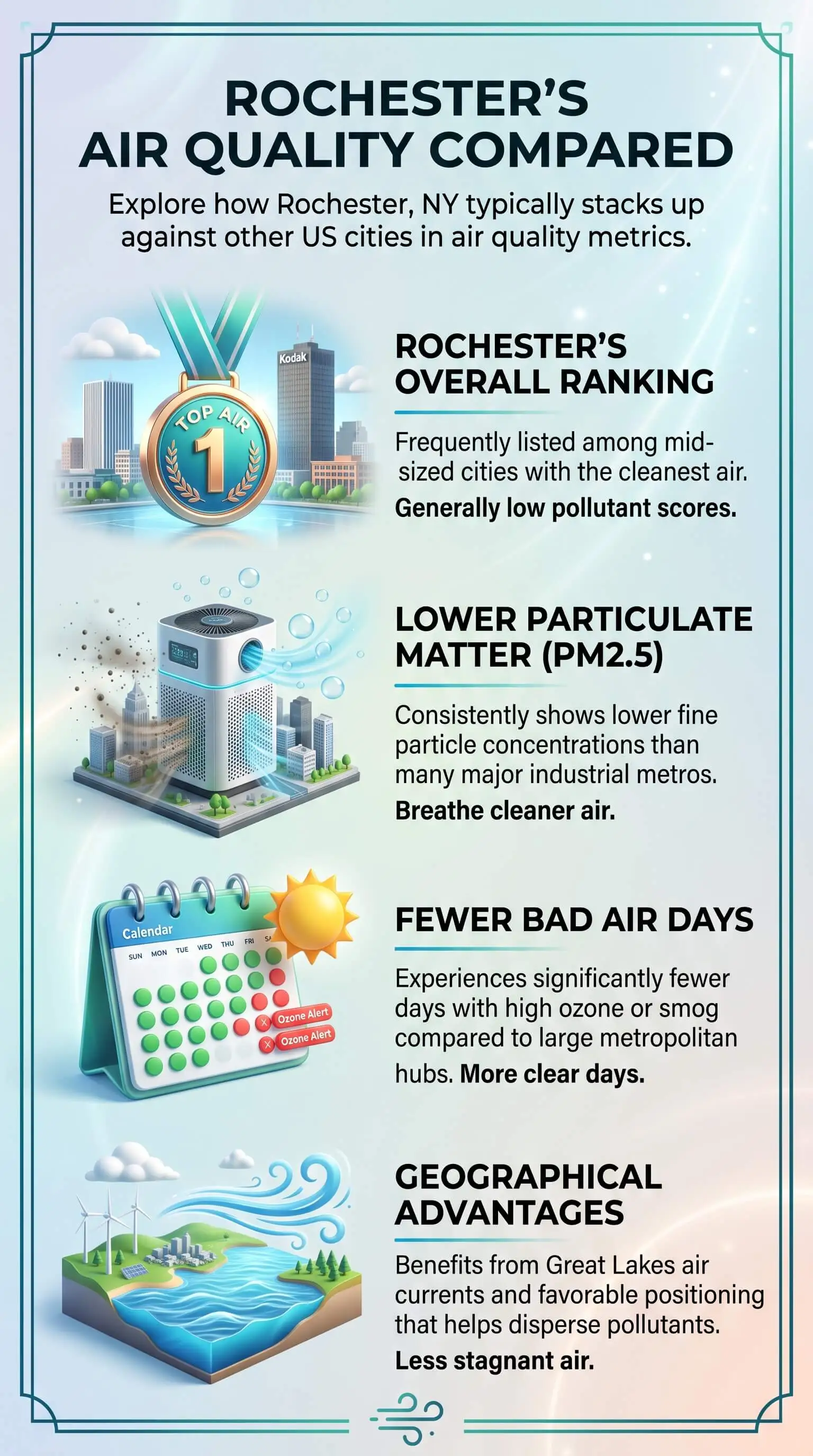
Rochester passes all three measured air pollutants, which puts it ahead of most American metro areas.
The 125th-worst ozone ranking reflects a crowded national field, not unhealthy air. The figure underneath it is 1.3 unhealthy days a year.
A grade measures a county against a fixed health threshold. A ranking measures a metro against other metros. Different questions.
One severe wildfire season warps three consecutive report cycles, because the scoring runs on a rolling three-year average.
Outdoor grades say nothing about indoor air, which is where you do most of your breathing.
What the Grades Actually Say About Rochester
The American Lung Association grades metro areas on three things: high-ozone days, short-term particle spikes, and year-round particle levels. Rochester, Batavia and Seneca Falls passed all three in the most recent State of the Air report. Sit with that for a second, because more than four in ten Americans live somewhere that failed at least one of them.
Monroe County earned a B for ozone, and the reason is almost anticlimactic. Two high-ozone days across the entire 2022 to 2024 window, both landing in the orange band, which means unhealthy for sensitive groups rather than for everybody. Wayne County out along the lake pulled a C, and that's what drags the metro average down.
Two bad days in three years. When somebody asks whether the air here is safe to breathe, that's the number I hand them.
Why the Grade Says Pass While the Ranking Says Mediocre
Here's where it falls apart for most readers. That same metro sits 125th worst in the country for ozone, on 1.3 unhealthy days a year. Triple-digit rankings sound alarming. This one isn't.
A grade and a ranking answer different questions. The grade holds a county against a fixed health threshold built from federal standards, so you pass or fail against a line that doesn't move. A ranking holds the metro against every other metro in the country, and there are only so many places to stand. When most of America now logs almost no unhealthy days at all, the distance between 20th place and 150th can come down to a fraction of a day per year. You're watching a rounding error get published as a rank. Air quality testing solutions should take priority when you need a more direct look at the conditions in the place you're actually breathing.
Picture a class where nearly everyone scores above 90. Coming 125th out of 200 still means you passed comfortably. The rank describes the class. The grade describes you.
Which is why I lose patience with headlines built on rank alone. "Rochester ranks 125th worst for ozone" is accurate and close to useless without the days-per-year figure sitting beside it. Go find the underlying count before you form an opinion about any city.
What the 2023 Smoke Season Rewrote
Rochester used to show up on the cleanest-cities lists. Then the Canadian wildfire season of 2023 arrived, every pollution measure for the metro worsened, and the next report dropped the region from both the ozone and particle lists.
I'd spent years assuming geography would protect this corner of New York. Smoke doesn't care. It ignores the winds that normally clear the area, arrives as a sheet, settles in for days, and pushes indoor particle counts to levels local emissions could never have produced on their own.
The recovery since then needs a careful read, because it isn't what it looks like. These reports run on three-year rolling averages, so a single bad season warps the numbers across three straight cycles. Rochester's return to passing grades isn't the air improving. It's a bad year aging out of the window.
So here's my honest read on 2023. It was an outlier, and outliers like it are arriving more often now. A grade describes a typical year. It says nothing about how many atypical days you ought to plan for.
How Rochester Compares With Other Cities
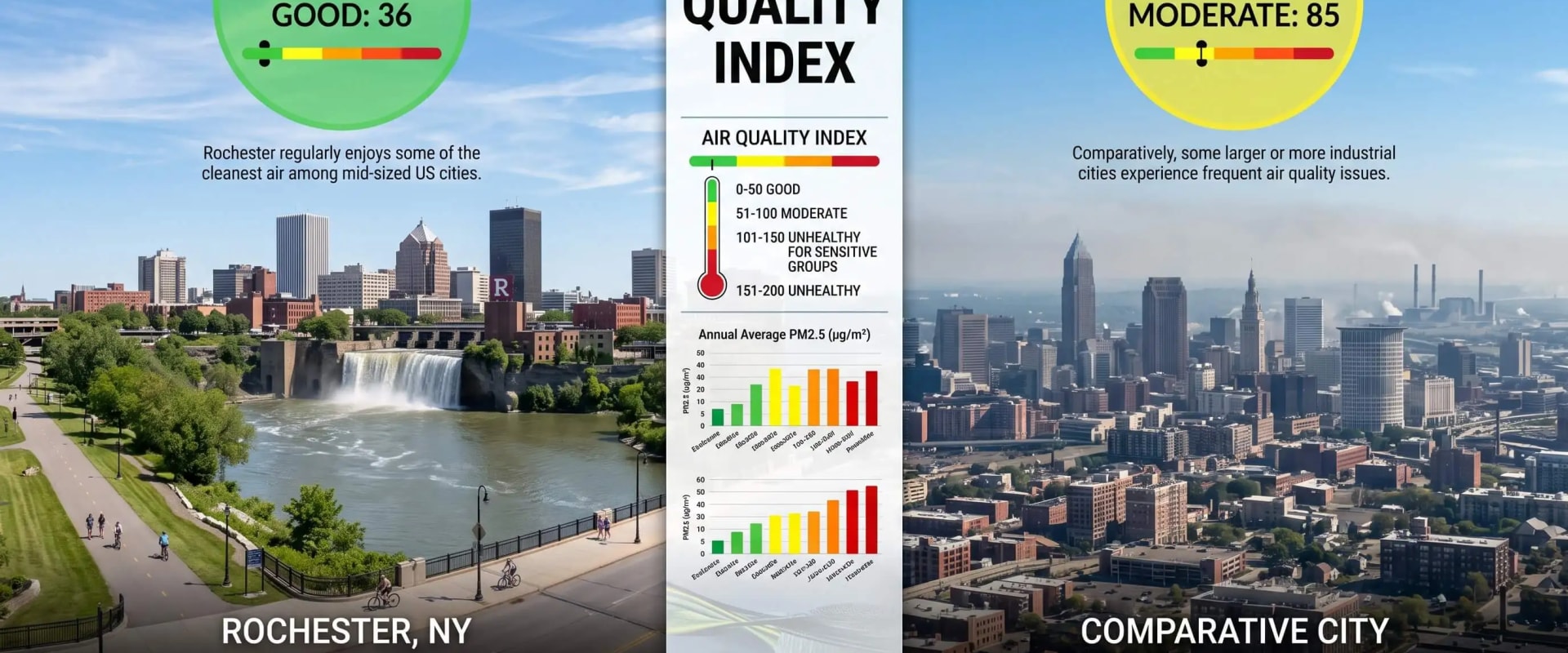
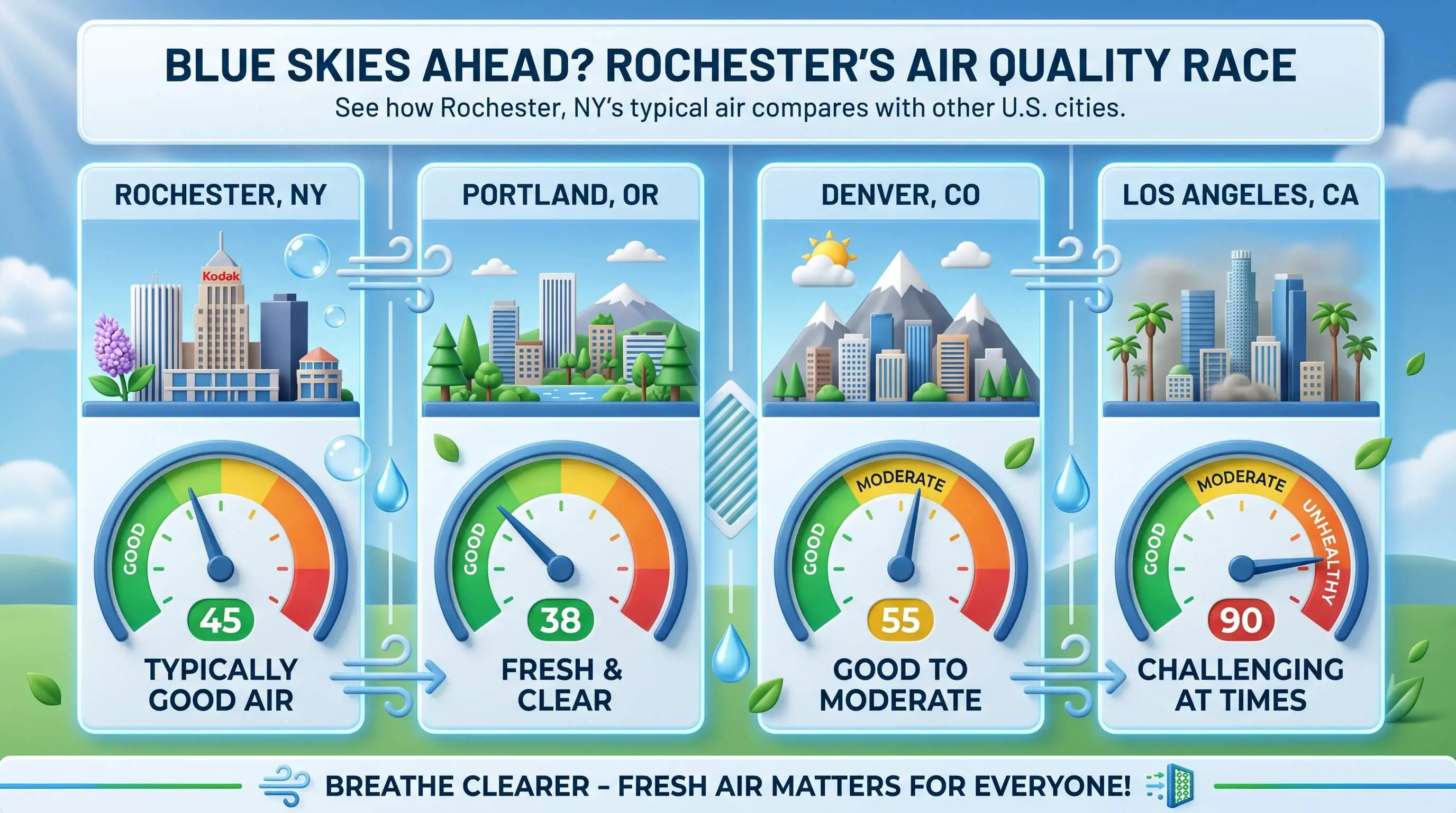
Set against the metros that own the worst-in-nation lists, Rochester isn't in the conversation. Cities in California's Central Valley rack up unhealthy ozone days by the dozen every year, because the terrain traps the air and the sunlight cooks it. Rochester logs low single digits.
Geography does real work here. The National Weather Service calls this a humid continental climate strongly modified by the Great Lakes, with steady air movement coming off Lake Ontario. Moving air scatters pollutants. Basins hold onto them, and that one structural difference explains most of the gap between here and the chronically polluted metros out west. For background on how the city grew up along the Genesee River, the Rochester city profile fills that in.
Buffalo runs close. Same shoreline, same weather systems, and neither city belongs anywhere near a worst-in-nation list, though Buffalo has carried a heavier year-round particle load in recent cycles.
Reading Conditions on an Actual Afternoon
An annual grade is a summary. It can't tell you whether to move Saturday's soccer game indoors.
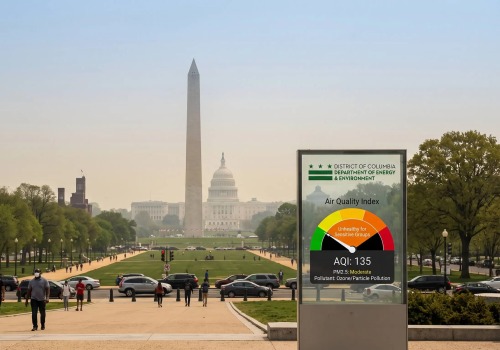
For that I check the index. The Air Quality Index runs 0 to 500 across six colored bands, and two thresholds matter through a Rochester summer. Under 50 is green, and you can stop thinking about it. Between 51 and 100 is yellow, fine for most people but worth a second look if somebody in your house has asthma. Past 100, the state issues a health advisory.
I keep live AQI readings for Rochester bookmarked, because the value moves hourly and a calm number at breakfast tells you almost nothing about four o'clock. Ozone climbs through the afternoon and peaks in the early evening on hot, still days. Particles run backwards from that, worst overnight and at dawn when the air stops moving. One index, two opposite clocks.
The Part No Outdoor Grade Covers
Outdoor monitors measure outdoor air. You spend most of your hours inside, where the mix is different and frequently worse, and where nobody publishes a grade at all.
Cooking, candles, pets, a wood stove, ordinary dust. All of it loads your indoor air with particles no regional score will ever capture, and what causes dust indoors can be as simple as everyday activity adding more particles to the air. On smoke days the outdoor particles come in anyway, pulled through the return ducts and every gap in the envelope. I've measured indoor counts on a perfectly moderate outdoor day that would've earned an orange reading if the monitor had been sitting in the living room instead of on a rooftop across town.
What I do about it isn't glamorous. On yellow days I run the system fan continuously instead of leaving it on auto, because a filter only catches what actually passes through it, and a fan cycling with the thermostat sits idle most of the hour. I shut the windows when the index passes 100 rather than when I can smell smoke, since the fine fraction shows up well before the smell does. And I make HVAC maintenance a priority by changing filters on a schedule instead of by eye. A filter that looks dirty has been choking airflow for weeks already.
"People ask me whether Rochester air is clean, and I tell them the outdoor number answers half the question. In years working on systems across Monroe County, the homes I get called to are almost never the ones with bad outdoor readings. They're running an undersized filter, or leaving the fan on auto straight through smoke season, or holding onto a filter three months past due. The top air filters can make a meaningful difference when they are properly sized, matched to the system, and replaced on schedule. You inherit your outdoor air. You choose your indoor air."
7 Essential Resources
AirNow AQI Basics, the plain-language explanation of the index bands and what each color means for activity: https://www.airnow.gov/aqi/aqi-basics/
EPA NAAQS Table, the federal health thresholds every grade and advisory gets built on: https://www.epa.gov/criteria-air-pollutants/naaqs-table
New York State DEC Air Quality Index Forecast and Current Observations, the state forecast and advisory page covering the Eastern Lake Ontario region: https://dec.ny.gov/environmental-protection/air-quality/air-quality-index-forecast-current-observations
New York State Department of Health ozone guidance, covering symptoms, who's most at risk, and when to time outdoor activity: https://www.health.ny.gov/environmental/outdoors/air/ozone.htm
CDC wildfire smoke risk factors, worth reading if anyone in the house has asthma, COPD, heart disease, or is under ten: https://www.cdc.gov/wildfires/risk-factors/index.html
Monroe County Environmental Health, the local office that handles environmental hazards and complaints inside the county: https://www.monroecounty.gov/eh
National Weather Service Rochester climate narrative, the source on how Lake Ontario shapes local air movement year round: https://www.weather.gov/buf/ROCclifo
3 Statistics
The Rochester, Batavia and Seneca Falls metro ranks 125th worst nationally for ozone pollution, on an average of 1.3 unhealthy ozone days per year, per the American Lung Association State of the Air city rankings: https://www.lung.org/research/sota/city-rankings
During the June 2023 Canadian wildfire episode, monitors in Syracuse, New York recorded fine particle concentrations above 400 micrograms per cubic meter, the highest reading for that city since routine measurement started in 1999, per NASA Earth Observatory: https://science.nasa.gov/earth/earth-observatory/smoke-smothers-the-northeast-151433/
The World Health Organization links roughly 4.2 million premature deaths worldwide each year to ambient air pollution, mainly through heart disease, stroke, chronic obstructive pulmonary disease, lung cancer, and respiratory infections: https://www.who.int/teams/environment-climate-change-and-health/air-quality-energy-and-health/health-impacts/exposure-air-pollution
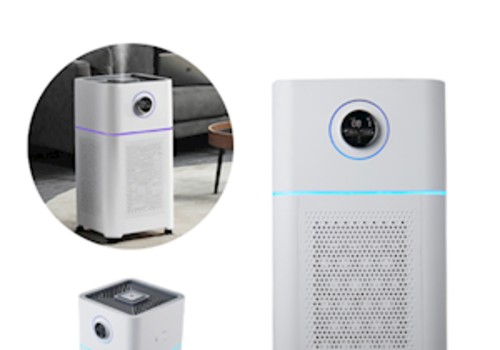
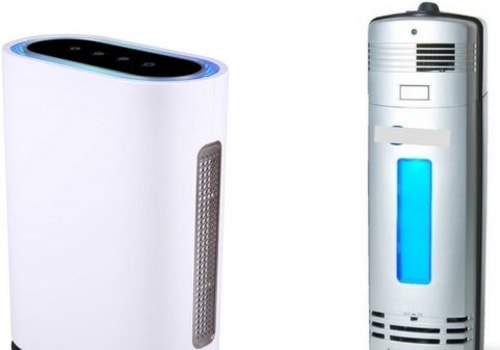
Rochester generally performs well on major air-quality measures, but ozone spikes and wildfire smoke can still raise pollution levels, making HEPA air purifiers a useful option for reducing fine airborne particles inside the home during poor-air-quality events.
Final Thoughts and Opinion
If somebody stopped me on Park Avenue and asked whether Rochester has good air, I'd say yes. Then I'd give them the caveat, because the caveat is the part that actually protects a household.
The yes holds up. Passing grades on all three measured pollutants, two bad ozone days across a three-year window, and a lake that never stops moving the air. Compare this region to the chronically polluted metros out west and you're comparing categories, not cities.
The caveat is that a good annual average has stopped predicting any particular week. 2023 showed that upstate New York can go from clean to hazardous in about thirty-six hours because of fires nine hundred miles away, and nothing in the local grade would have warned a single family. My opinion, and I'll own it: the annual report matters a little less every year, the daily reading matters a lot more, and most people's habits haven't caught up yet.
So here's what I tell neighbors. Quit treating the grade as reassurance and start treating the index like a weather check. Five seconds. On the handful of days a year when it counts, that's the difference between staying ahead of it and getting caught out. HVAC replacement can also become a priority when an aging system can no longer manage airflow and filtration effectively.
Frequently Asked Questions
Is the air quality in Rochester NY good?
Yes, by the measures that track health risk. The Rochester metro passed on ozone, short-term particle pollution, and year-round particle pollution in the most recent State of the Air report. Monroe County logged only two high-ozone days across the three-year window, and both sat in the sensitive-groups band rather than the unhealthy-for-everyone band. MERV 8 pleated HVAC furnace air filters can help support cleaner indoor air by capturing many of the larger airborne particles that build up inside homes.
What is a normal AQI for Rochester NY?
Most days land in the green band under 50, or the low yellow band between 51 and 100. Anything above 100 is uncommon here. When it happens, it usually traces to a hot, stagnant summer afternoon or to wildfire smoke that traveled in from outside the region. The value shifts hourly, so one morning check won't tell you much about the rest of the day.
Does Rochester have better air quality than Buffalo?
They're close. Both cities sit on Great Lakes shorelines and share the same weather. Buffalo has carried a heavier year-round particle load in recent report cycles, while Rochester has scored slightly better across all three measures. Neither appears on a worst-in-nation list, so the day-to-day difference for a resident is small.
When is Rochester air quality at its worst during the year?
Ozone peaks on hot, sunny, low-wind afternoons in July and August, generally from mid-afternoon into early evening. Fine particle pollution follows a different clock, running higher on cold still mornings in winter and during any summer week when wildfire smoke moves down from Canada.
Does a passing air quality grade mean I don't need indoor filtration?
No. Outdoor monitors measure outdoor air, and you take most of your breaths inside. Cooking, pets, dust, and combustion appliances all generate particles that never show up in a regional grade, and outdoor smoke finds its way in through ducts and gaps no matter what the annual score says.
Next Steps
Two moves, and neither one costs you anything.
Check the local index before you commit to anything outdoors that runs longer than an hour, the same way you'd check for rain. Ozone builds through the afternoon, so a green morning isn't a promise.
Then match what runs indoors to what the index is telling you. On green and low-yellow days, ordinary filtration handles ordinary dust and pollen. When the number passes 100 or smoke is in the forecast, step up to the highest-efficiency filter your system can take, run the fan continuously, and keep the windows shut until the reading drops. You inherit your outdoor air. Your indoor air is the part you get to decide, and it's the part that protects the people living in the house.