The best soap for diabetics in an air-conditioned home is gentle, fragrance-free and pH-balanced, with no sulfates or alcohol. It cleans without stripping the oils that cold, dry air is already pulling out of your skin. Follow it with a cream right after you wash, and keep the room's humidity between 30% and 50%.
The soap by your sink matters more than it looks, and so does the air you wash in. We'll cover both.
TL;DR Quick Answers
Best Soap for Diabetics
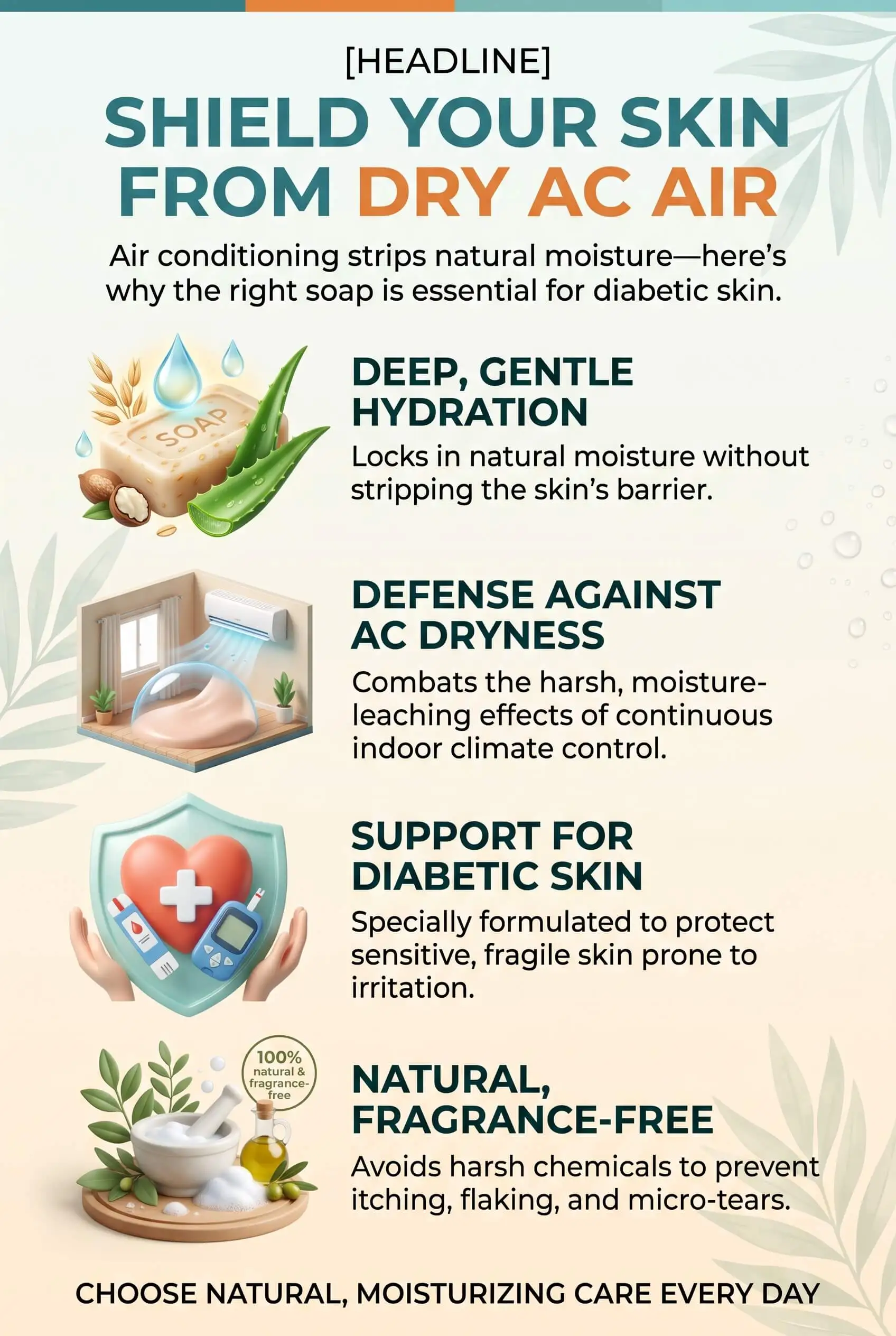
The best soap for diabetics is a gentle, fragrance-free, pH-balanced cleanser with no sulfates or alcohol. Diabetic skin already holds water poorly, so the right soap cleans without stripping the barrier that keeps germs out.
pH-balanced: close to skin's mildly acidic pH, not an alkaline bar that can reach pH 10 to 11.
Fragrance-free: look for "fragrance-free" on the label, not "unscented".
Free of sulfates and alcohol: SLS, SLES and drying alcohols pull out barrier oils.
Not for daily use: skip deodorant and antibacterial soaps.
Plant-based: gentle ingredients such as coconut milk, kaolin clay and glycerin.
Rinse-free option: handy for frequent handwashing, because it cuts how often your hands are under drying water.
In air-conditioned rooms: apply a cream within minutes of washing, and keep humidity at 30% to 50%.
Top Takeaways
Air conditioning lowers indoor humidity, and once the air drops below about 30%, your skin loses water faster.
Dry skin is very common with diabetes, and cracked skin raises your risk of infection.
Pick a gentle soap that's fragrance-free, pH-balanced, and free of sulfates and alcohol.
Retire deodorant, antibacterial and traditional alkaline bars from everyday washing.
Wash in warm water, pat dry and apply a cream within minutes. Keep it out from between your toes.
Hold indoor humidity between 30% and 50%, and point AC vents away from your body.
Check your hands and feet every day, and call your doctor about cracks or sores that won't heal.
Why Air Conditioning Dries Out Diabetic Skin Faster
Two things work against you at once. The air in the room is drying out, and diabetes has already made your skin worse at holding on to water.
An air conditioner cools the room by pushing warm air across cold coils, and water condenses out as it goes. You get cooler air and drier air in the same breath. Once humidity drops below about 30%, the air starts drawing water from the surface of your skin. A vent aimed at your desk or your pillow speeds that up. The EPA's indoor air guide recommends keeping indoor humidity between 30% and 50%.
Diabetes adds its own strain. High blood sugar and nerve damage can cut down on sweating, so skin dries and cracks more easily. Dry skin is one of the most common skin conditions linked to diabetes. In a 2021 study across several Italian diabetes centers, researchers found dry skin, or xerosis, in 81.3% of people with type 2 diabetes. They also tied it to faster water loss through a weakened skin barrier, and every crack in that barrier gives germs a place to get in.
What to Look For in the Best Soap for Diabetics
Start with what a soap leaves out. Turn the bottle over and check the label for these five things.
A pH close to your skin's. Healthy skin is slightly acidic, at around pH 4.5 to 5.5 . Traditional bar soaps can run as high as pH 10 to 11. When researchers compared soap types, they found that alkaline soaps raised skin pH and water loss and caused more redness than milder formulas .
No added fragrance. Synthetic scent is a common irritant on sensitive skin. Look for "fragrance-free" on the label, because "unscented" products can still hide a masking fragrance.
No sulfates or alcohol. SLS, SLES and drying alcohols strip the same barrier oils that dry air is already draining.
No deodorant or antibacterial agents for daily washing. The AAD and MyHealth Alberta both warn in their diabetes skin guidance that these soaps dry the skin further.
Plant-based ingredients that respect moisture. Gentle cleansers and binders such as coconut milk, kaolin clay, tapioca starch, glycerin and oat lift dirt away without scrubbing off what your skin needs.
When a label checks every box, with a gentle, fragrance-free, pH-balanced formula built from plant-based ingredients, you've found the best soap for diabetics who spend their days in cool, dry rooms. For frequent handwashing, the best waterless hand soap can also be a convenient option for keeping hands clean without repeated exposure to drying water. Few brands print their exact pH. Read the ingredient list instead. It's the most reliable guide you have.
Soap Types Compared for Diabetic Dry Skin
For everyday washing, syndet cleansers and gentle rinse-free formulas are the safest picks. Traditional and antibacterial bars are the ones we'd retire first.
Traditional bar soap (poor fit). These bars are alkaline, with a pH up to 10 to 11, and they strip skin oils harder than any other type here.
Deodorant or antibacterial bar (poor fit). Also alkaline, with added agents that dry and irritate.
Glycerin or creamy bar (fair fit). The pH varies. Added glycerin softens the drying effect.
Syndet bar or liquid cleanser (good fit). Often close to skin pH, with milder cleansing agents. Check the label for fragrance.
Cream or soap-free wash (good fit). Close to skin pH. It cleans gently and leaves a light film behind.
Rinse-free plant-based soap (good fit for hands through the day). Labelled pH-balanced, and your hands spend less time under water, which also dries skin.
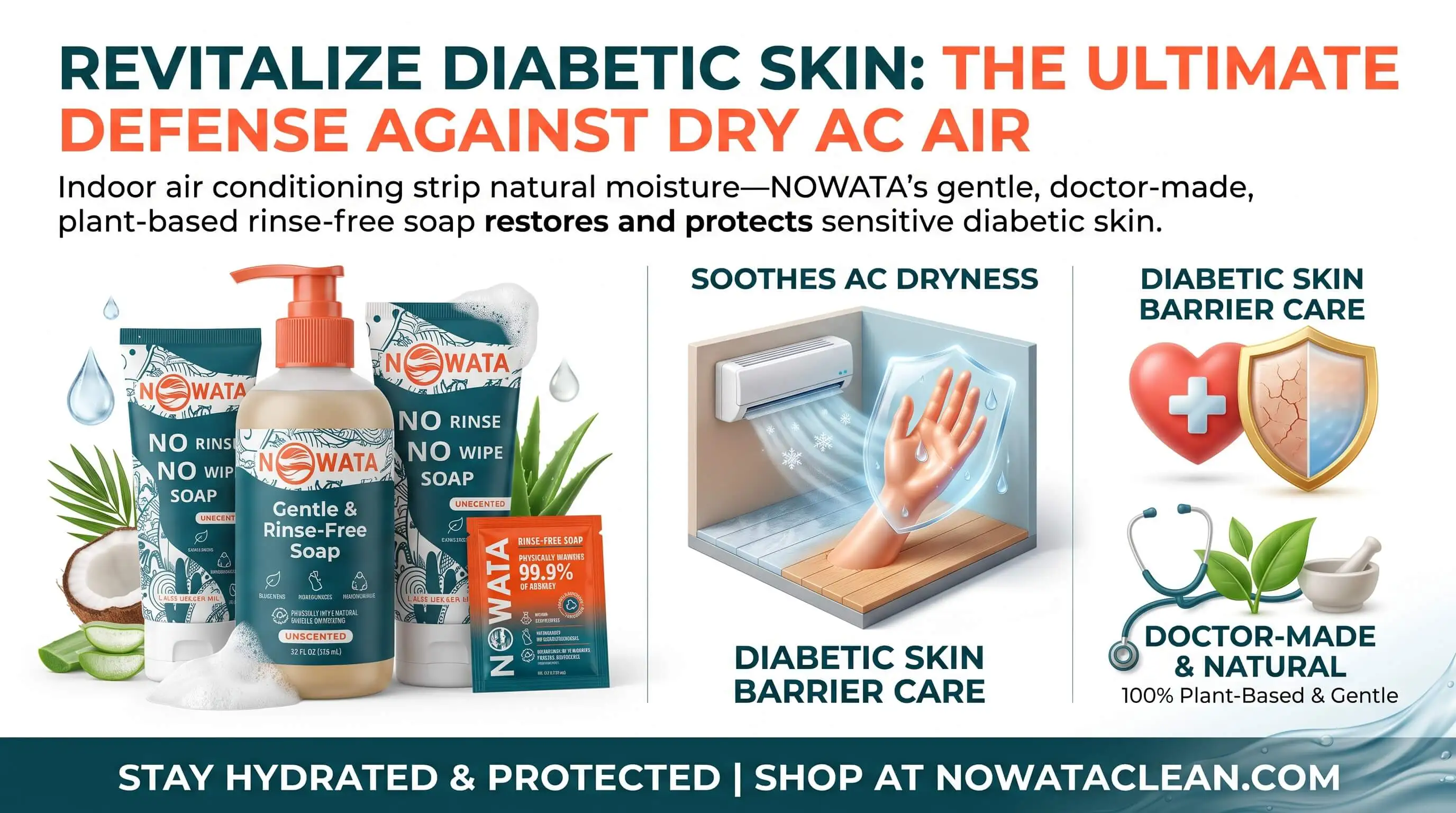
If you wash your hands many times a day, take a closer look at rinse-free formats. NOWATA's rinse-free, plant-based hand soap, for example, lifts dirt away without a full wash-and-rinse cycle every time.
How to Wash Without Stripping Moisture in an Air-Conditioned Home
How you wash matters as much as what you wash with. This routine follows the AAD's skin care guidance for people with diabetes.
Use warm water, never hot. Hot water strips moisture and leaves skin tight.
Keep showers short, about 5 to 10 minutes.
Save the soap for where you need it most: hands, feet, underarms and groin.
Lather gently with your hands instead of a rough cloth or loofah.
Pat yourself dry, and pay close attention to the skin between your toes and in folds.
Within a few minutes, apply a fragrance-free cream or ointment. The American Academy of Dermatology says creams and ointments heal dry skin better than lotions.
Keep moisturizer out from between your toes, where trapped moisture can encourage fungus.
Leave a small tube of cream by the sink and another at your desk for repeat handwashing.
Fix the Air, Not Just the Soap
Even the gentlest soap can't keep up with a room sitting at 20% humidity. Small changes to the air make a noticeable difference.
Measure first. A digital hygrometer costs little and shows your room's humidity at a glance. Aim for 30% to 50%.
Add moisture where you spend the most time. A humidifier in the bedroom or home office helps overnight and through long workdays. Clean it often so it doesn't spread mold.
Redirect the airflow. Angle vents and fans away from your body and your bed, so cold air isn't blowing across your skin for hours.
Don't overcool. A moderate thermostat setting pulls less moisture from the air than running the AC at its coldest.
Keep the system clean. Fresh filters hold airflow steady and keep dust off your skin. Our guides on selecting the best AC home air filters and how often to change your AC air filter walk you through it.
Daily Skin Checks and When to Call Your Doctor
Small problems are easier to stop than big ones. Each evening, look over your hands, your heels and the skin between your toes.
Call your doctor if you notice cracks that bleed, redness or warmth around a sore, a cut that isn't improving after a few days, or itching that keeps you awake at night. If over-the-counter products aren't enough, a dermatologist can recommend a stronger moisturizer.
"Most of the dry-skin complaints I hear from people with diabetes in summer have nothing to do with the sun. They start in the rooms people sit in all day. We began keeping hygrometers beside the wall units in our own home and office, and the readings surprised us. With the AC running, they often slipped into the low 20s by mid-afternoon. At that point, even a careful moisturizing routine is working uphill. My advice is to change the soap and the air together. Swap any scented or antibacterial bar for a gentle, fragrance-free, pH-balanced soap, because each wash with an alkaline bar strips oils your skin can't easily replace. Then bring the room back into the 30% to 50% range and point the vents away from where you sit and sleep. People who make both changes usually tell us their hands and heels feel less tight within a couple of weeks. The soap protects the barrier, and the air stops pulling water out of it."
7 Essential Resources
We lean on these sources most. Each one goes further on a point this guide only touches.
American Academy of Dermatology: Dermatologist-Recommended Skin Care for People With Diabetes. Dermatologists explain why gentle cleansers and warm water matter, and why fragrance-free creams with ceramides beat lotions.
American Diabetes Association: Diabetes and Skin Complications. The ADA covers the skin problems diabetes causes most often and recommends mild soap with moisturizer, plus a more humid home in dry months.
US EPA: Care for Your Air, A Guide to Indoor Air Quality. Here's where the 30% to 50% indoor humidity target comes from, along with tips for measuring and adjusting it.
NIDDK: Diabetes and Foot Problems. The National Institutes of Health walks you through washing, drying and checking your feet every day.
MyHealth Alberta: Caring for Your Skin When You Have Diabetes. Plain guidance on using soap only where you need it and skipping deodorant and antibacterial soaps.
Wikipedia: Diabetes Mellitus. A broad overview of diabetes, including the skin infections and foot problems it can lead to.
Skin Disorders in Diabetes Mellitus: An Epidemiology and Physiopathology Review. This 2016 review in Diabetology & Metabolic Syndrome explains why diabetes affects the skin and how often these problems show up.
These resources explain how gentle, fragrance-free soaps, proper moisturizing, and balanced indoor humidity can help protect diabetic skin from dryness and irritation. Alongside these skincare practices, HEPA air purifiers can help reduce airborne dust and allergens in air-conditioned rooms, supporting a cleaner indoor environment for people with sensitive skin.
3 Statistics
40.1 million people in the US have diabetes, about 12.0% of the population. Around 11.0 million adults with diabetes don't know they have it yet. Source: CDC National Diabetes Statistics Report.
81.3% of people with type 2 diabetes had dry skin. Researchers found it in 244 of 300 scored patients in a 2021 Italian multicentre study. Source: Acta Dermato-Venereologica.
Manufacturers can formulate common soap bars at a pH as high as 10 to 11, far above the mildly acidic pH of healthy skin. Source: Journal of Cosmetic Science.
Put together, the numbers tell a simple story. Millions of people have skin that dries out easily, and the most common bar soaps push that skin the wrong way.
Final Thoughts and Opinion
We think the best soap for diabetics is the one that does the least harm, wash after wash. Most advice stops at "use a mild soap." That's good advice, but it ignores the room you wash in. When the AC drags the air toward 20% humidity, your skin loses water all day long, and a harsh bar finishes the job at the sink.
We'd rather you treat soap and air as one routine. Choose a gentle, fragrance-free, pH-balanced cleanser and follow it with a cream. Then measure the humidity where you spend your days and bring it back into the 30% to 50% range. None of it is expensive or complicated, and together these steps protect the skin barrier that keeps infections out.
If your skin still cracks, bleeds or itches after these changes, don't wait it out. Diabetic skin deserves a doctor's eyes sooner rather than later.
Frequently Asked Questions
What soap is best for diabetics with dry skin?
Choose a gentle, fragrance-free, pH-balanced cleanser with no sulfates or alcohol. Syndet cleansers, soap-free washes and gentle plant-based formulas all fit. Follow every wash with a fragrance-free cream to hold in moisture, especially if you spend your day in air-conditioned rooms.
Can air conditioning cause dry skin?
Yes. An air conditioner removes moisture from the air as it cools. When indoor humidity falls below about 30%, the air pulls water from your skin and leaves it tight, itchy and more likely to crack. A vent blowing straight at you makes it worse.
What indoor humidity is best for dry, diabetic skin?
Aim for 30% to 50%, the range the EPA recommends for homes. A simple hygrometer shows where your room stands. If it reads low while the AC runs, put a humidifier in the rooms where you spend the most time.
Should diabetics use antibacterial soap?
Not for everyday washing, because antibacterial and deodorant soaps can dry your skin further. For small cuts, wash gently with mild soap and water, cover the area, and ask your doctor before you use an antibiotic ointment.
Is bar soap or body wash better for diabetics?
The formula matters more than the format. Traditional bars are usually alkaline and drying. Syndet bars and many liquid cleansers sit closer to your skin's natural pH. Either way, check the label for fragrance, sulfates and alcohol.
How often should diabetics moisturize in an air-conditioned home?
Moisturize after every bath or shower, and after handwashing whenever your skin feels tight. Keep a small fragrance-free cream at your sink and your desk. Your feet need it too, but keep it out from between your toes.
Protect Your Skin and Your Air Starting Tonight
Take two minutes for your skin tonight. Turn over the soap at your sink and read the label. If it lists fragrance, sulfates, alcohol or antibacterial agents, it's time to switch to a gentle, fragrance-free, pH-balanced soap. Then check the humidity in the room where you spend the most time and nudge it back toward 30% to 50%.
Your skin works hard to protect you, so give it a soap that respects it and air that doesn't drain it. For more on gentle cleansing, read our guide to the best hypoallergenic hand soap for eczema on hands and fingers. And to keep your system breathing easy, browse our AC air filter guides.